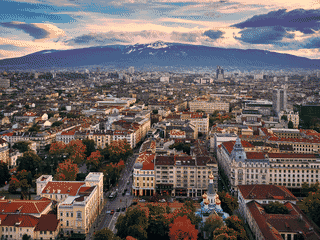

Sofia
Eastern Europe and the Balkans · Bulgaria
Did you know?
- Banitsa is a cheese pastry commonly eaten for breakfast.
- Roman Serdika ruins lie within the modern capital.
- Alexander Nevsky Cathedral dominates the square bearing its name.
See also
Overview
Sofia brings Roman remains, Ottoman mosques and Orthodox domes into a walkable capital. Soviet-era architecture adds another layer to the streetscape.
Languages: Bulgarian
Why Go?
Sofia blends 2,500 years of history—from Roman Serdika ruins to Ottoman mosques to Soviet brutalism—into a walkable capital where Orthodox domes rise beside glass towers. The city is one of Europe's few capitals with a ski resort (Vitosha Mountain) within 30 minutes of the center, offering hiking, skiing, and views without leaving the metro network. Bulgaria's EU membership makes it one of the cheapest Western-adjacent capitals: expect low-cost accommodation, hearty banitsa breakfasts, and affordable museum admissions.
Adapted from Wikivoyage contributors · CC BY-SA 4.0
Getting In
Sofia Airport (IATA: SOF) lies 9 km east of the center with direct flights across Europe, the Middle East, and occasional connections to Asia. Trains connect Sofia to Plovdiv (3 hours), Varna (6 hours), Bucharest via Ruse, and international routes to Istanbul. Five bus stations serve national and international destinations: Central Bus Station on Maria Luiza Blvd handles most regional routes, while International Bus Station near the train station serves cross-border lines. Domestic train tickets require cash at Sofia Central Station.
Adapted from Wikivoyage contributors · CC BY-SA 4.0
Getting Around
Sofia Metro has three lines (Red, Blue, Green) covering major sights and transport hubs; fares are cheap and trains run frequently. Trams and trolleybuses supplement the network—routes 1, 3, 6, 7 along Maria Luiza Blvd connect the central station to the city center. Sofia Bike Rental operates April to November with bike rental and guided tours starting at 10:00. The city center is compact enough for walking, with the yellow-brick pedestrian streets around Serdika and Vitosha Blvd.
Adapted from Wikivoyage contributors · CC BY-SA 4.0
When to Go
May through June and September through October offer mild temperatures (15-25°C), fewer tourists, and pleasant conditions for sightseeing and Vitosha hikes. December through February brings cold (averaging -2°C to 4°C) and occasional snow, making Vitosha ski resorts ideal. July and August can be hot (28°C average) and crowded with Bulgarian holidaymakers. Sofia's geothermal hot springs still flow beneath the city center year-round.
Adapted from Wikivoyage contributors · CC BY-SA 4.0
Where to Stay
Hostels cluster around the central triangle bounded by Vitosha Blvd, Graf Ignatiev Str., and Slaveykov Square, with dorm beds from €7-12 and private rooms from €10-18. Peter Pan Hostel offers owner-run accommodations on Knyaz Aleksandar Dondukov Blvd; Levitt Hostel provides free high-speed internet and kitchen access for €10. Budget hotels near the train and bus stations (Maxim Hotel, Alegra Hostel) cost €30-60 but put you near transport hubs rather than sights.
Adapted from Wikivoyage contributors · CC BY-SA 4.0
Food and Drink
Traditional Bulgarian cuisine features banitsa (cheese pastry for breakfast), kavurma, shopska salata, and kebapcheta. Trafа Beerhouse on William Gladstone St serves classic Bulgarian dishes with balcony views; Hadjidraganovite kashti near Lion's Bridge offers traditional feasts with live music from €10-30. For quick bites, Ali Baba on Alabin St serves kebabs and falafel; Mekitsa and Coffee offers traditional Bulgarian breakfast. Vitosha Blvd has trendy cafes with outdoor seating in summer. Nightlife ranges from cocktail bars like The Cocktail Bar to speakeasy Bar 5L where the door code changes daily.
Adapted from Wikivoyage contributors · CC BY-SA 4.0
Things to Do
St. Alexander Nevsky Cathedral, the largest church in the Balkans, dominates Alexander Nevsky Square and is free to enter. Boyana Church (UNESCO World Heritage) costs 10 лв and requires timed entry for its 13th-century frescoes. The National Museum of History in Boyana houses 650,000+ exhibits including Thracian gold; admission is 10 лв (students 1 лв). The Museum of Socialist Art displays communist-era statues outdoors (free) and artifacts inside for 6 лв. Football fans can catch matches at Vasil Levski National Stadium (capacity 43,000) or club matches at CSKA and Levski stadiums.
Adapted from Wikivoyage contributors · CC BY-SA 4.0
Safety
Sofia is generally safe to walk even at night, but avoid poorly lit areas around the central bus and rail station, Maria Luiza Blvd south of the center, and Lions' Bridge. Borisova Garden park can be unsafe after dark due to drug activity and opportunistic theft. Pedestrians should be cautious as many Bulgarian drivers do not yield to people on foot. Football fans can be aggressive, especially on match days—avoid wearing club colors. Be wary of strangers selling stolen goods or offering unsolicited help. Police corruption is a known issue if you encounter legal trouble.
Adapted from Wikivoyage contributors · CC BY-SA 4.0
Connectivity
5G internet is available from all three major mobile networks: A1, Vivacom, and Yettel. WiFi is widely available in public places, cafes, and hostels. Bulgaria uses Type F power plugs (two-round-pin German style) with 230V. SIM cards are readily available from the three carriers with pay-as-you-go options for tourists.
Adapted from Wikivoyage contributors · CC BY-SA 4.0
Budget
Sofia is one of Europe's most affordable capitals for backpackers. Hostel dorms cost €7-12 per night, budget meals run 5-15 лв per dish at local restaurants, and museum admissions are typically 2-10 лв. Metro rides cost around 1.60 лв, while a daily pass offers better value for transport. Budget 30-50 лв per day for food, transport, and activities, with accommodation as the primary variable expense.
Adapted from Wikivoyage contributors · CC BY-SA 4.0
Day Trips
Rila Monastery, Bulgaria's most famous monastery and UNESCO World Heritage Site, makes an excellent day trip south of Sofia via Blagoevgrad or organized hostel tours. Vitosha Mountain offers hiking in summer and skiing in winter, accessible by bus 64 or metro to Boyana then bus. Bankya, a mineral springs resort 15 km west, is accessible by public transport. Plovdiv's Old Town and Roman ruins are reachable by highway or rail in under 3 hours.
Adapted from Wikivoyage contributors · CC BY-SA 4.0
Etiquette
Bulgarians traditionally nod upward (as if throwing something) for "no" and nod down for "yes"—confusing for visitors. Dress modestly when visiting Orthodox churches (shoulders and knees covered). Tipping 10% is customary in restaurants. Public displays of affection between same-sex couples should be discreet as Bulgaria remains socially conservative. Remove hats in churches and mosques.
Adapted from Wikivoyage contributors · CC BY-SA 4.0
Go Next
North toward the Balkan Mountains leads to Etropole and Pravets (Communist dictator's museum). West lies Bankya (mineral springs, 15 km) and further to Pernik and Kyustendil. South toward Rila: Blagoevgrad and Rila Monastery (UNESCO); Borovets ski resort. Plovdiv (Bulgaria's second city, 3 hours) has Roman ruins and an atmospheric Old Town. Veliko Tarnovo, the medieval capital, offers dramatic riverside scenery. Cross-border options include North Macedonia via Kyustendil, Romania via Ruse or Vidin, Serbia via Kalotina (60 km west), and Turkey by train to Istanbul.
Adapted from Wikivoyage contributors · CC BY-SA 4.0
Field guide adapted from Wikivoyage contributors · CC BY-SA 4.0. Text has been adapted and organized for this guide. About our sources.
Places to know
A few starting points from the guide. Check current hours and prices before you go.
- eat
Ali Baba
Good place for a quick bit of kebabs and falafel.
Adapted from Wikivoyage contributors
- eat
Cosmos Restaurant / Космос
Adapted from Wikivoyage contributors
- eat
DARO
A breakfast restaurant
Adapted from Wikivoyage contributors
- eat
Dream House
Very good vegetarian restaurant. Quick service, simple and good food, good value for money.
Adapted from Wikivoyage contributors
- eat
Gastrobar 6
Favorite place for delicious food in a great pleasant atmosphere. You feel at home
Adapted from Wikivoyage contributors
- eat
Godzila
Godzila's first restaurant opened in 1999 in the sea capital of Bulgaria, Varna . There you can try some fresh salads, juicy barbecue, delicious pizza and various other dishes. The menus are also written in English and the staff speaks English as well. There are traditional Bulgarian cuisine and Western cuisine as well.
Adapted from Wikivoyage contributors
- eat
Hadjidraganovite kashti
Amazing restaurant just off one of Sofia's main streets. The decor is old-style Bulgarian and the food is traditional Bulgarian, plentiful and very, very tasty. Entertainment includes a Bulgarian walking band and guests are primarily locals. Staff is very friendly and most speak English. Reservations are necessary, even on weeknights.
Recorded price: €10-30 (April 2011)
Adapted from Wikivoyage contributors
- eat
Motto
This place is always fairly busy with a trendy crowd. The decor is modern and cool, and the people typically good looking. The service here is usually pretty nice, and many of the wait-staff speak English. The food is consistent and enjoyable.
Recorded price: 5–15 лв per dish.
Adapted from Wikivoyage contributors
Before you go
Connectivity
5G available from A1, Vivacom, and Yettel. WiFi common in cafes and hostels. Type F power plugs with 230V.
Food
Traditional dishes include banitsa, kebapcheta, shopska salata. Budget meals 5-15 лв. Mekitsa and Coffee serves authentic Bulgarian breakfast.
Language
Bulgarian is the official language using Cyrillic script. English spoken by younger people and tourist-facing staff. Russian is sometimes understood by older generations.
Money
Bulgaria uses the lev (лв). ATMs limit withdrawals to 400 лв per transaction. Exchange only at banks—street exchange offices may scam you. Credit cards accepted in larger stores but carry cash for small shops.
Safety
Avoid areas around central bus/rail station, Maria Luiza Blvd south, and Borisova Garden after dark. Watch for petty theft and aggressive football fans on match days.
Transport
Metro (three lines), trams, trolleybuses, and buses. Sofia Bike Rental operates April-November. Central Bus Station handles most national routes.
Visa
Bulgaria is in the EU (not Schengen). Many nationalities get 90 days visa-free within 180-day period. Check before arrival.
Weather
Best months: May-June and September-October. Cold winters with snow (good for Vitosha skiing). Hot summers (28°C July-August).