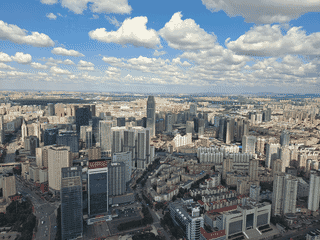

Shenyang
East Asia · China
Did you know?
- Three UNESCO World Heritage Sites preserve imperial palaces and tombs from the Qing founding era.
- The Mukden Palace was built in 1625 for Nurhaci in distinct Manchu architectural style.
- Hot pot, mala tang, and chuan'r barbecue are local ways to explore Liaocai flavors.
See also
Overview
This northeastern capital pairs Qing-era imperial heritage with three UNESCO sites and substantial museum history. Its metro and rail links make it a practical base for regional excursions.
Languages: Chinese
Why Go
Shenyang is the largest city in northeast China and a capital steeped in history, serving as the seat of the Qing dynasty's founding emperors before the court moved to Beijing. The city preserves three UNESCO World Heritage Sites: the Mukden Palace, Fuling Tomb (where Nurhaci is buried), and Zhaoling Tomb (where Huang Taiji rests). Beyond its imperial heritage, Shenyang offers a distinctive Liaocai cuisine, vibrant night markets, and access to ski resorts, making it a compelling alternative to more tourist-heavy Chinese destinations.
Adapted from Wikivoyage contributors · CC BY-SA 4.0
Get In
Shenyang Taoxian International Airport offers direct international flights to Seoul, Cheongju, Pyongyang, Irkutsk, Khabarovsk, Frankfurt, Osaka, Tokyo, and Vancouver. The city is served by three major railway stations: Shenyang North Railway Station (沈阳北站) on Metro Line 1, Shenyang Railway Station (沈阳火车站) on Line 2, and Shenyang South Railway Station (沈阳南站). High-speed trains connect Shenyang to Beijing in about 2.5 hours.
Adapted from Wikivoyage contributors · CC BY-SA 4.0
Get Around
The Shenyang Metro has four lines (1, 2, 9, and 10) serving major attractions and transport hubs. Line 1 runs east-west serving Shenyang Railway Station; Line 2 runs north-south serving Shenyang North Railway Station. The comprehensive bus system charges ¥1-2 per ride, with major lines congregating around train stations. Bus 203 travels between the two main train stations. Taxis start at ¥8 for the first 3 km, then ¥1.8 per kilometer. Sights in Shenhe District (old city) can be walked between.
Adapted from Wikivoyage contributors · CC BY-SA 4.0
When to Go
Shenyang experiences extreme seasonal variation with very cold, dry winters (nights can drop to -20°C or below) and hot, humid summers (daytime temperatures near 30°C). The best time to visit is late spring (May) through early autumn (October) when weather is mild. The Cai Dian Ta night market operates from late March until late October. Ski resorts operate from December through February. Avoid visiting during Chinese New Year when many attractions close.
Adapted from Wikivoyage contributors · CC BY-SA 4.0
Where to Stay
Budget accommodation near the Imperial Palace includes Shenyang Zhijia Qingnian Hotel (13 Shenyang Rd) with cheap singles and hourly rates from ¥30. Mid-range options include Eletel (¥267/night) on Zhong St and Grand Century Hotel (¥349/night) near the south train station. The Shenhe District (old city) offers the most convenient access to major attractions including the palace, night market, and shopping at Zhong Jie.
Adapted from Wikivoyage contributors · CC BY-SA 4.0
Food and Drink
Liaoning is home to Liaocai (辽菜), a distinctive cuisine strong in flavor with garlic, ginger, and spices but not spicy. Shenyang's large Korean and Mongolian populations operate numerous barbecue stands. Local specialties include hot pot (火锅), mala tang (麻辣烫), and chuan'r barbecue (串儿). The Cai Dian Ta night market near the Liaoning Radio Tower offers cheap barbecue, noodles, and local dishes including the Liaoning specialty menzi (闷子), operating seasonally from March to October. For fine dining, Cafe Lido at the Sheraton serves the best Western food in town (¥180-200).
Adapted from Wikivoyage contributors · CC BY-SA 4.0
Things to Do
The Mukden Palace (¥60) is the centerpiece attraction, built in 1625 for Nurhaci in distinct Manchu architectural style. The two Qing dynasty imperial tombs—Fuling (¥30) and Zhaoling (¥30)—are both UNESCO World Heritage Sites. The 9.18 Memorial Museum documents the 1931 Mukden Incident that triggered Japan's invasion of China. The Former Residence of Zhang Xueliang (¥50) tells the story of the warlord who ruled northeast China. Free museums include the Liaoning Provincial Museum, China Museum of Industry, and Shenyang World War II Allied Prisoners Camp Site Museum.
Adapted from Wikivoyage contributors · CC BY-SA 4.0
Safety
Shenyang is generally a safe city for travelers. Standard precautions apply regarding personal belongings in crowded areas and markets. The city is rapidly developing with extensive construction; be aware of traffic when crossing streets. During winter, sidewalks can be icy—take care when walking. Taxis without visible dashboard meters should be avoided as drivers may manipulate fares.
Adapted from Wikivoyage contributors · CC BY-SA 4.0
Connectivity
Mobile coverage is excellent throughout Shenyang with all major Chinese carriers (China Mobile, China Unicom, China Telecom) offering 4G services. Free WiFi is available in most hotels, shopping malls, and some public areas. Power outlets use Type I plugs (two or three flat parallel pins) at 220V/50Hz, standard throughout mainland China.
Adapted from Wikivoyage contributors · CC BY-SA 4.0
Budget
Shenyang is relatively affordable for a major Chinese city. Budget travelers can eat well at night markets and local noodle shops for ¥20-40 per meal. Metro rides cost ¥2-4, bus rides ¥1-2, and taxi starts at ¥8. Hostel beds start around ¥50-80, while budget hotel rooms range ¥150-300. Museum entrance fees are mostly free or under ¥60.
Adapted from Wikivoyage contributors · CC BY-SA 4.0
Day Trips
From Shenyang, travelers can visit the Northeast Asia Ski Resort (28 km away, daytime skiing ¥135 for 2 hours) or Qipanshan Ice and Snow World (20 km away, daytime skiing ¥150 for 2 hours) during winter. The 2006 International Horticultural Exposition Garden (¥35) in Dongling District remains a major attraction with international gardens and a roller coaster. Fushun is accessible by bus for ¥10 from either railway station.
Adapted from Wikivoyage contributors · CC BY-SA 4.0
Go Next
Shenyang serves as a gateway to northeast China. Dandong offers access to the North Korean border and the Yalu River. Dalian is a coastal port city accessible by train. Changchun and Harbin to the north offer additional Qing dynasty sites and the famous Harbin Ice Festival. International connections include Vladivostok in Russia via train. Beijing is about 2.5 hours away by high-speed rail.
Adapted from Wikivoyage contributors · CC BY-SA 4.0
Field guide adapted from Wikivoyage contributors · CC BY-SA 4.0. Text has been adapted and organized for this guide. About our sources.
Places to know
A few starting points from the guide. Check current hours and prices before you go.
- eat
BaoFaYuan 宝发园
Famous for its 四绝 (Four Outstanding). While locals might not remember the name "BaFaYuan", everyone knows "Four Outstanding" given the name was giving by Zhang Xueliang.
Recorded price: ¥60/person
Adapted from Wikivoyage contributors
- eat
Cafe Lido
It is recognized as being the best Western food in Shenyang. Serving Australian beef, mashed potatoes Irish style, Guinness meat pies, fresh fish, salads and the tastiest pastries in town. Special on Friday's Seafood Night, small price for all you can eat and drink.
Recorded price: ¥180-200
Adapted from Wikivoyage contributors
- eat
La Bellevue
For bigger budget there is also a fine dining French restaurant, "La Bellevue".
Adapted from Wikivoyage contributors
- eat
Lao Bian Jiaozi Restaurant 老边饺子
Dumplings restaurant. Lao Bian Jiaozi, founded in 1829, is one of the most famous dumpling restaurants.Guinness World Records 2000 for the World's Oldest Dumpling Restaurant.
Adapted from Wikivoyage contributors
- eat
Xita Korea Town
Not one restaurant but an area with many good restaurants. The streets around the Western Pagoda (Xita) are home to many Korean people giving the area the name Korea Town.
Adapted from Wikivoyage contributors
- see
9.18 Memorial Museum
At 22:30 on 18 September 1931, a bomb exploded beside the Japanese-run railway line near Shenyang. Though instigated by the Japanese, the Chinese were blamed for the event giving the Japanese an excuse to invade and occupy the whole of the northeast of China. Shenyang was the epicenter of that invasion, so it is most appropriate that the museum for the Mukden Incident, known in China as the '9.18 Incident', is in Shenyang next to the spot where the explosion occurred. The museum, as one would expect, depicts the incident from a Chinese perspective. It is not for the faint of heart because it unflinchingly displays the atrocities of war. Only the main descriptions are available in English, but it's enough to follow the course of events. The pictures and exhibits speak for themselves, anyway.
Recorded price: Free
Adapted from Wikivoyage contributors
- see
China Museum of Industry
Tells the story of the industrialisation of China. The museum is built on the site of an old foundry, which has been largely preserved in its original state.
Recorded price: Free
Adapted from Wikivoyage contributors
- see
City walls
The original city walls of Shenyang were destroyed in the 1950s. Some small sections have been reconstructed to give an impression of the former city. These remains consist of two gates, Huaiyuanmen and Fujinmen, at either end of Shenyang Lu.
Adapted from Wikivoyage contributors
Before you go
Food
Liaocai cuisine features strong flavors with garlic and ginger. Street food is excellent and affordable. The Cai Dian Ta night market near the Kempinski Hotel is a must-visit for local specialties including chuan'r barbecue and menzi.
Language
Mandarin Chinese is the primary language. English is limited outside major hotels and tourist sites. Learning a few basic phrases in Chinese is helpful. Korean is widely spoken in the Xita/Korea Town area.
Money
China's currency is the yuan (¥/CNY). ATMs are widely available, especially near banks on major streets. Credit cards are accepted at larger hotels and restaurants but cash is preferred at markets and local shops.
Transport
The metro is the most efficient way to cross the city. Taxis are plentiful and affordable. A city bus map in Chinese is essential for navigating the bus system. Bus 203 connects the two main railway stations.
Visa
Most foreign nationals require a Chinese visa. Tourist visas (L visa) are typically single or double entry for 30-60 days. Apply well in advance at your nearest Chinese embassy or consulate.
Weather
Winters are extremely cold (often below -20°C at night) while summers are hot and humid (30°C+). Pack accordingly—layers are essential for winter visits. Summer brings significant rainfall from June to August.