
Riga
Eastern Europe and the Balkans · Latvia
Did you know?
- The House of the Blackheads was restored in the late 1990s.
- Art Nouveau facades feature carvings of flowers and mythological creatures.
- Amber and wool mittens appear among the central market's souvenir finds.
See also
.jpg)
Cēsis
Latvia57.32°N 25.27°E · 119 m
Sigulda
Latvia57.15°N 24.87°E
Overview
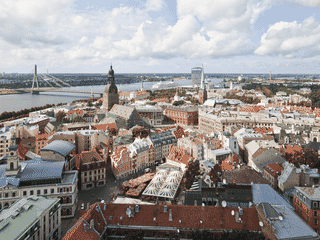
Riga's medieval old town occupies the east bank of the Daugava. Nearby, the district around Alberta iela adds Art Nouveau architecture to a city walk.
Languages: Latvian
Why Go
Riga is the financial, creative, and cultural centre of Latvia — a UNESCO-listed old town (Vecrīga) with over 800 Art Nouveau buildings, giving it one of the densest concentrations of that architectural style in the world. The city offers cheap European flights, vibrant nightlife, hearty Latvian cuisine, and serves as an ideal base for exploring the compact Baltic states. A third of Latvia's 640,000 residents live here, creating a metropolis that still feels approachable for backpackers.
Adapted from Wikivoyage contributors · CC BY-SA 4.0
Understand
Riga lies on the Gulf of Riga at the mouth of the Daugava river. The medieval old town (Vecrīga) occupies the east side of the river, surrounded by a ring of 19th- to early 20th-century architecture including the famous Art Nouveau district around Alberta iela. Many Art Nouveau buildings were designed by ethnic Latvian architects in the early 1900s, featuring intricate facades with flower and mythological creature carvings. The old town received protected status in 1967, and damaged buildings like the House of the Blackheads were restored in the late 1990s. Beyond the centre, Soviet-era apartment districts and pre-WWII wooden house areas offer glimpses into everyday Latvian life.
Adapted from Wikivoyage contributors · CC BY-SA 4.0
When To Go
Riga has a temperate seasonal climate: winters are cold with snow from December through February (average -4°C, 220 cm snowfall), while summers are mild and pleasant (14-24°C, July-August). The best time for sightseeing is late spring through early autumn (May-September) when outdoor activities and long daylight hours prevail. Key festivals include Jāņi (June 24 summer solstice), Latviabeerfest (end of May), Riga Rhythms Festival (end June/early July), and White Night (early September). Christmas markets animate the old town in December.
Adapted from Wikivoyage contributors · CC BY-SA 4.0
Talk
The official language is Latvian, but Russian is widely spoken in Riga — ethnic Russians comprise slightly more than a third of the city's population. English is common among younger people and tourism industry workers. German is frequently spoken by tour guides. Signs are typically bilingual (Latvian and Russian), with English becoming more prevalent in tourist areas.
Adapted from Wikivoyage contributors · CC BY-SA 4.0
Get In
Riga International Airport (10 km southwest) serves approximately 5 million passengers per year with connections across Europe, particularly budget carriers like airBaltic. The main bus station and Riga central station (Rīgas Pasažieru stacija) are located south of Centrs, east of the old town, with good public transport connections throughout the city. International trains connect to Moscow, Minsk, and other Eastern European destinations.
Adapted from Wikivoyage contributors · CC BY-SA 4.0
Get Around
Riga has a comprehensive public transport network including buses, trams, and trolleybuses. The city centre and old town are walkable, and boat tours depart from near the Freedom Monument along the Daugava river and canal. For day trips, car rental provides flexibility to explore Latvia and nearby Estonia and Lithuania.
Adapted from Wikivoyage contributors · CC BY-SA 4.0
Where To Stay
The largest concentration of hotels is in and around Vecrīga. Budget travelers should head to the eastern half of the old town or the area around the railway station. Upscale options cluster in central Vecrīga and near Esplanade Park in Centrs. Most hotels and hostels offer free WiFi and accept credit cards.
Adapted from Wikivoyage contributors · CC BY-SA 4.0
Food and Drink
Latvian cuisine is hearty, featuring potato, cabbage, beef, pork, and fish. Local chains like Lido (8 locations, cafeteria-style) offer decent traditional food at good prices. Čili Pica provides cheap but good pizza at multiple locations including near the Freedom Monument and Stockmann mall. International cuisines, especially sushi, are popular. Vecrīga has many tourist trap restaurants — scrutinize prices carefully before ordering.
Adapted from Wikivoyage contributors · CC BY-SA 4.0
Things To Do
In Vecrīga, visit Town Hall Square with the 13th-century House of the Blackheads and Riga Cathedral, plus the National History Museum (in Riga Castle) and Museum of the Occupation. Centrs features the Freedom Monument and the finest Art Nouveau row houses on Alberta iela. Parks include Mežaparks (north, with old villas and Riga Zoo) and areas around the city canal. Boat rides tour the old town via the Daugava. Football matches take place at Daugava Stadium (men's national team) and clubs like Riga FC and RFS play in Virslīga (April-November).
Adapted from Wikivoyage contributors · CC BY-SA 4.0
Buy
Look for Latvian amber and wool mittens/socks at the central market or little stands throughout Vecrīga — bargaining can yield good prices. A Christmas market operates in the old town main square during the holiday season. Shopping malls in the suburbs offer practical purchases and quick meals.
Adapted from Wikivoyage contributors · CC BY-SA 4.0
Safety
Riga is generally safe with basic precautions. The old town and major thoroughfares are extremely safe at all times. However, certain western neighborhoods with significant Russian populations should be avoided after dark, and bar fights are relatively common due to high alcohol consumption. See the Drink section for important scam warnings about specific bars targeting tourists.
Adapted from Wikivoyage contributors · CC BY-SA 4.0
Go Next
All of the Baltic states are within 300 km of Riga. Latvia itself offers numerous attractions reachable as day trips. Estonia (Tallinn, 3-4 hours by bus) and Lithuania (Vilnius, 4-5 hours) make excellent overnight or longer trips. The compact region is ideal for a multi-country Baltic itinerary.
Adapted from Wikivoyage contributors · CC BY-SA 4.0
Field guide adapted from Wikivoyage contributors · CC BY-SA 4.0. Text has been adapted and organized for this guide. About our sources.
Places to know
A few starting points from the guide. Check current hours and prices before you go.
- eat
Lido
A network of 8 restaurants offering decent hearty Latvian food, including desserts, at good prices. The restaurants are either cafeteria-style or feature English menus.
Adapted from Wikivoyage contributors
- eat
Čili Pica
Cheap but good pizza.
Adapted from Wikivoyage contributors
- see
Art Nouveau District on Alberta iela
One of the world's densest clusters of Art Nouveau architecture with intricate facades and ornamental carvings.
Adapted from Wikivoyage contributors
- see
Freedom Monument
Iconic 42-meter monument commemorating Latvian independence, surrounded by a major junction and nightlife area.
Adapted from Wikivoyage contributors
- see
House of the Blackheads
Striking 13th-century building on Town Hall Square, restored in the late 1990s.
Adapted from Wikivoyage contributors
- see
Museum of the Occupation of Latvia
Important museum documenting Soviet and Nazi occupations from 1940-1991.
Adapted from Wikivoyage contributors
- see
National History Museum of Latvia
Museum housed in Riga Castle documenting Latvian history through the ages.
Adapted from Wikivoyage contributors
- see
National Museum of Art
Latvia's main fine art museum with extensive collections of Latvian and European art.
Adapted from Wikivoyage contributors
Before you go
Connectivity
Free WiFi common in hotels and cafes. Mobile providers include LMT, Tele2, Bite. EU roaming applies for EU phone users.
Culture
Riga's Art Nouveau architecture (800+ buildings) is among the world's finest examples. UNESCO-listed old town features medieval and baroque structures. Strong folk traditions reflected in Song and Dance Festival.
Language
Latvian official; Russian widely spoken; English common among young people and tourism workers; German spoken by tour guides.
Money
Latvia uses the Euro (€). Credit cards widely accepted at hotels, restaurants, and shops. ATMs plentiful in city centre. Watch for bar scams charging €100+ for drinks — never follow strangers into bars.
Safety
Old town very safe at all times. Avoid western Russian-speaking neighborhoods after dark. Bar fights common; stay calm and avoid escalation.
Transport
Riga International Airport 10 km southwest. Main bus station and central train station south of Centrs. Public transport (buses, trams, trolleybuses) covers the city; centre walkable.
Weather
Cold winters (avg -4°C, heavy snow Dec-Feb) and mild summers (14-24°C, best May-Sep). Summer solstice Jāņi June 24 is a major national holiday.