
Overview
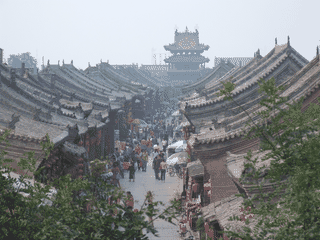
Pingyao's compact walled old town preserves cobbled Ming and Qing streets and an atmosphere that feels like a period film. Its small scale makes it easy to explore on foot while historic banks, temples, and manor compounds add depth.
Architecture · History · Culture · Day Trips · Shopping
Did you know?
- Rishengchang Exchange House opened in 1823, became China's first bank, and is now a museum.
- The 6-km-long walls date from 1370 and have 3000 crenellations and 72 watchtowers.
- The old walled city is only about 1 mile by 1 mile, making walking the primary way to explore.
Why Go?
Pingyao is the best ancient walled city in China and ranks among the finest preserved walled cities globally. Its 2.6 km² old town features cobbled streets and buildings almost entirely from the Ming and Qing dynasties, offering an authentic period-film atmosphere. Unlike destinations overrun by foreign tourists, over 99% of visitors are mainland Chinese, preserving the site's integrity and cultural immersion.
Getting In
Pingyao is accessible by train, with high-speed connections to major cities. Beijing is 4-5 hours away by high-speed train, Xi'an is 3 hours by train, Taiyuan is just 30 minutes away, and Datong is 3 hours by train. The Pingyao Gucheng railway station serves the ancient city area.
Getting Around
The old walled city is only about 1 mile by 1 mile (1.6 km by 1.6 km), making walking the primary way to explore. Most of the old walled city is off-limits to taxis and cars. Golf carts are available for hire at around ¥5 for a single person or ¥15 for four people. Bicycle rental costs approximately ¥10 per day, though crowded streets with Chinese tourists may not make cycling faster than walking.
When to Go
The Lantern Festival, held 15 days after the Lunar New Year, sees the town decorated in red lanterns with parades. The Pingyao Crouching Tiger Hidden Dragon International Film Festival (PYIFF) takes place for 15 days in mid-September to October, featuring films from non-Western countries. Shoulder seasons offer milder weather and fewer crowds.
Where to Stay
The ancient city is full of Ming/Qing-era compounds converted into hotels and hostels, making staying in one part of the experience. On the main street, beds can cost up to ¥400, but exploring backstreets can reduce this price by three-quarters. Modern accommodation is mostly located outside the old city walls. Popular hostels include Yamen Hostel (¥35 dorm, ¥80 double) and Harmony Guesthouse (¥40 dorm, ¥80-120 double).
Food and Drink
Pingyao's signature dish is Pingyao Beef, with an acquired strong taste similar to corned beef. Be cautious in touristy restaurants where bills of ¥100 or more are not uncommon for seemingly cheap meals. Food inside the city walls often caters to tourists and is overpriced. Going outside the walls usually yields better prices and quality. Fangie Breakfast Beef Huoshao offers Pingyao beef sandwiches for ¥15. Western options include Sakura (on East/West street) and Lily's Pub (on Ming-Qing Street).
Things to Do
The 6-km-long city walls date from 1370 and can be walked atop, with 3000 crenellations and 72 watchtowers. The Rishengchang Exchange House (1823) was China's first bank, now a museum. The Pingyao County Yamen Museum, built in 1346, contains over 300 rooms. Ming-Qing Street is the main commercial avenue with traditional shops. The Temple of the City God dates to the Northern Song Dynasty. Shuanglin Temple (7 km southwest) houses over 2000 colorful sculptures. Zhenguo Temple (12 km northwest) is the only remaining temple in China built in Five Dynasties Period style.
Buy
The Ancient City is lined with tourist-oriented shops selling standard Chinese bric-a-brac at relatively high prices. Beware of antique forgeries and bargain hard. Look for stalls selling handmade crafts where they are made. Pingyao is known for excellent cloth shoes and has a large lacquerware industry. Along with Datong, Pingyao is a good place to buy Shanxi's famous aged dark vinegar, sold in supermarkets, food shops, and tourist stores. For modern shops, the area outside the west gates is recommended.
Drink
Nightlife is limited, but you can sip drinks until midnight at many guesthouse restaurants. Domestic and foreign beers, Chinese hard liquor (typically 50% or stronger), and Chinese whiskey (~35%) are available at most shops. Sakura offers Western food, music, and drinks at reasonable prices in the center of East/West Street. Lily's Pub on Ming-Qing Street is popular with single travelers.
Day Trips
The Chang Family Compound (¥80) in Chewuang Village is the largest Shanxi merchant manor, with only one quarter of the original 600,000 m² remaining. The Qiao Family Compound (¥115) in Qiaojiabao Village was featured in Zhang Yimou's film 'Raise the Red Lantern.' The Qu Family Compound (¥40) in Qi County includes access to six museums including an abacus museum. The Wang Family Compound (¥55) in Lingshi County has 54 courtyards and over 1000 rooms. Mount Mian (¥110 April-October, ¥90 November-March) is 40 km south and is the birthplace of the Qingming Festival. Zhangbi Castle (¥67), 10 km southeast of Jiexiu, features 1.5 km of restored underground passages.
Go Next
From Pingyao, Beijing is 4-5 hours by high-speed train, Xi'an is 3 hours by train, Taiyuan is 30 minutes by train, and Datong is 3 hours by train. These connections make Pingyao an excellent stop on a broader Shanxi or central China itinerary.
Guide text adapted from Wikivoyage contributors under CC BY-SA 4.0.
Where to start
Sleep
Chengshengyuan Inn
The hotel is located inside the scenic area of the ancient city of Pingyao, making it a good choice for those who want to get to know the old city.
Price when recorded: ¥88-178
Sleep
Four Seasons on the Cloud
Price when recorded: ¥114-499
Sleep
Harmony Guesthouse
This guesthouse is very popular with Western travellers.
Price when recorded: Dorms about ¥40, doubles ¥80-120
Sleep
Pingyao Yiguan Folk Custom Inn
Pingyao Yiguan Folk Custom Inn is set in Pingyao ancient city, 100 metres from Pingyao Ancient Government Office. Guests can enjoy the on-site restaurant.
Price when recorded: From ¥200
Sleep
Shangke You Hotel Chain
Price when recorded: ¥71-134
Sleep
Yamen Hostel
Probably the most popular hostel with foreigners. You can call them to arrange a free pick up from the train station. The staff speak English, many fluently. They have a dedicated travel desk to make bus/train ticket bookings, tours, etc.
Price when recorded: Expect to pay about ¥35 for a dorm bed, and maybe ¥80 for a double. Discounts for HI members
Sleep
Yufengheng Inn
Price when recorded: ¥64-119
Sleep
Zhengjia Hotel & Hostel
A few doors down the street from Yamen Hostel, this is actually two buildings next to one another. The hostel has private rooms on the ground floor and dorms on the 2nd. The hotel is all private, and has perhaps slightly nicer private rooms. You have access to both facilities whichever one you stay in. General consensus is that Zhengjia has the nicer rooms, but unless the owner is around to do things himself, Yamen has significantly superior service. Some opt for staying here, while booking tickets at Yamen's travel desk.
Price when recorded: Rooms average ¥60 (single) to ¥75 (triple), ¥40 for dorm beds. Discounts for HI members
Before you go
Accommodation
Ming/Qing courtyard hotels are the authentic choice. Main street beds up to ¥400; backstreet options quarter that price. Popular hostels include Yamen Hostel and Harmony Guesthouse.
Food
Pingyao Beef is the local specialty. Tourist restaurants inside walls can charge ¥100+ for simple meals. Better value outside the walls. KFC and McDonald's available near gates.
Money
Local currency is Chinese Yuan (¥). ATMs available outside city walls. Credit cards rarely accepted inside the ancient city. Budget ¥35-80 for hostels, ¥15-50 for meals.
Tickets
Many attractions are covered by a combination ticket. City Tower (¥5) is not included. Shuanglin Temple (¥25) and transport (~¥40) are separate. Day trip compounds have individual entrance fees (¥40-115).
Transport
The old city is walkable at 1.6 km by 1.6 km. Golf carts cost ¥5-15, bikes ¥10/day. Trains connect to Beijing (4-5 hr), Xi'an (3 hr), Taiyuan (30 min), and Datong (3 hr).