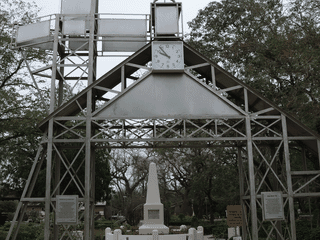
Overview
Neuland is a quiet Mennonite community in the Paraguayan Chaco. Its museum and nearby Fortín Boquerón connect settlement history with the Chaco War.
Culture · History · Quiet
Did you know?
- Restaurant Boquerón brings German and Paraguayan cooking to the same lunch buffet.
- The historical museum recreates a main house, barn and kitchen.
- Nivaclé artisans carve Chaco animals from palo santo wood.
Why go?
Neuland is the smallest and most intimate of Paraguay's three major Mennonite colonies, offering a rare glimpse into a German-speaking community thriving in the harsh Chaco desert. The town boasts one of the best Mennonite museums in the Chaco, with authentic period furnishings and artifacts that illustrate the settlers' pioneering ingenuity. Visitors intrigued by Mennonite culture, Chaco history, or quiet off-the-beaten-path destinations will find Neuland rewarding. Its proximity to Fortín Boquerón, the most significant Chaco War site, makes it an ideal base for history enthusiasts.
Get in
Overland by road is the only way to reach Neuland. The town lies 464 km northwest of Asunción on the Transchaco highway. Most travelers arrive by bus from Asunción, with connections through Filadelfia (the largest Mennonite colony). If coming from Bolivia, catch the Asunción-Santa Cruz bus and arrange your Paraguayan exit stamp at Mariscal Estigarribia before boarding. The Stel Turismo agency in Neuland sells bus tickets for the Bolivia route at US$65 to Santa Cruz de la Sierra.
Get around
Neuland is compact enough that most sights are reachable on foot. Avenida 1° de Febrero is the main street where the cooperative, supermarket, museum, hotel, and most businesses cluster. There is no public transportation in town. For destinations outside town like Fortín Boquerón (28 km southeast), visitors typically hire a taxi or arrange transport through the tourist office.
When to go
The Chaco experiences extreme heat from October to March (summer) and mild, drier conditions from May to September (winter). The most comfortable time to visit is during the dry season months of May through August. Two events draw visitors: the Expo Rodeo in May and the Transchaco Rally in late September—both cause hotel demand to spike, so advance reservations are essential during these periods.
See
The Museo Histórico (city museum) gives the best sense of early Mennonite life, with period rooms including a main house, barn, and kitchen. Don't miss the large egg incubators used for transporting produce to Asunción markets. Parque Chaco Boreal features three commemorative statues honoring early women settlers and the colony's anniversaries. The Iglesia Mennonita de Neuland, built in 1955 through 17 days of community service from each colony member, offers insight into Mennonite values. Freundschaft Park preserves the natural terrain as it appeared when settlers arrived.
Buy
Visit the Neuland Coop Supermarket to see the wide variety of goods produced by the cooperative, from dairy to honey. APICSA at the town entrance sells Chaco honey, considered among the finest natural honeys in Paraguay and exported nationwide. In the Cayin ô Clim neighborhood, Nivaclé artisans craft carpets, bags, and palo santo wood carvings depicting Chaco animals like turtles, anteaters, and armadillos. Bring cash—credit cards are rarely accepted outside the hotel and cooperative supermarket.
Eat
Restaurant Boquerón, attached to Hotel Boquerón, serves German and Paraguayan cuisine with a lunch buffet. For pizza, Manjessi on Avenida 1° de Febrero 1280 is advertised as the best pizza in the Chaco and stays open late on weekends (M, W-Su 10:30-13:30, 18:00-23:00). Outside these options, supplies are limited—visitors may need to rely on the cooperative supermarket for self-catering.
Drink
Nightlife is minimal in this hard-working Mennonite community. After dark, most residents retire early. Manjessi pizzeria is the only spot offering drinks in the evening, making it the social hub for visitors seeking an evening out.
Sleep
Hotel Boquerón is the only accommodation in Neuland, making advance booking essential, especially during the Transchaco Rally (late September) and Expo Rodeo (May). The hotel has 22 rooms split between a newer wing with private bathrooms and an older, cheaper wing with shared facilities. The on-site restaurant serves decent meals including a small lunch buffet.
Connect
Wi-Fi is available for guests at Hotel Boquerón. Mobile coverage exists but connectivity details (carriers, data options) are not specified in the article. Visitors should arrange any essential communication before arriving in Neuland, as services are limited.
Go next
The other two Mennonite colonies make excellent day trips: Filadelfia lies 37 km north and is the largest, most cosmopolitan colony; Loma Plata is 62 km north via Filadelfia, known for its dairy industry. For Bolivia, take the Asunción-Santa Cruz bus from Mariscal Estigarribia (arrange exit stamp at immigration office there before boarding). Alternatively, the Chaco Research and Conservation Center (60 km northwest) offers stays for nature enthusiasts wanting to explore the Chaco further, with dorm rooms available for multi-day visits.
Guide text adapted from Wikivoyage contributors under CC BY-SA 4.0.
Where to start
Sleep
Hotel Boquerón
Although is the only hotel in town, it's a very good one. With 22 rooms it has a new wing with rooms nicely done and an old wing with cheaper, shared bath rooms. The restaurant serves up decent meals and has a small lunch buffet as well.
Eat
Manjessi
Advertised as the best pizza in the Chaco. Is the city's pizza place. Popular at night.
Price when recorded: Inexpensive
Eat
Restaurant Boquerón
Part of the Hotel Boquerón, the restaurant has good meals, specializes in German and Paraguayan cuisine. It offers a buffet for lunch.
See
Centro Chaqueño para la Conservación e Investigación
A research center dedicated to the conservation of the peccary (known locally as taguá). You can see three different species of peccary up close. There is a guest house with dorm rooms and kitchen for visitors who want to stay for two or more days (booking is required). The center's location is ideal for nature enthusiast and those who want to venture into the Chaco. You need to bring all the supplies as the nearest store is in Filadelfia. Just to the left of the center is Fortín Toledo, a historic site from the Chaco War, and worth visiting.
See
Fortín Boquerón
Founded in 1928 to stop the advance of Bolivian troops, Fortín Boquerón is one of the Chaco War's most significant historic landmarks. Strategically located near fresh water reserves, the fort played a key role in the hostilities between Paraguay and Bolivia both before and during the Chaco War in 1932-35. In 1928 the fort of Boquerón was taken by Bolivia, but then taken back by Paraguay. In July 1932 Bolivia took the fort again, and in September the same year it was retaken by Paraguay in a costly and bloody siege that marked a decisive victory for Paraguay. It still took Paraguay another three years to push the Bolivians out of the Chaco, and the peace settlement was not signed until 1938. Today, it is the site of a large museum complex dedicated to the war, showcasing an extensive collection of Chaco War photos and weaponry. The premises also retain many of the original 3,800 m of defensive trenches, most about 1.5 m deep. Although they are no longer fortified with barbed wire and snipers positions, the thorny vegetation surrounding the trenches and the intense heat is enough to make you pity of the Chaco War soldiers. The tourist trail follows along the old trenches and leads to two small cemeteries for Bolivian and Paraguayan soldiers. Along the way, there are palo borracho trees whose trunks were hollowed out to create hiding places for snipers. The area along the trenches is overgrown, but at the site of the Paraguayan cemetery you will see the savannah-like cleared lands with wild grass similar to what the battlefield looked like in 1932. Presiding over the cemetery is a large, original cross. The clearing in front of the museum features an evocative statue of a Paraguayan soldier created by the famed Paraguayan artist Herman Guggiari. The site is best visited with a guide that can be hired through the tourist office in Neuland or Filadelfia. Another option is to hire a taxi for a roundtrip from either Filadelfia or Neuland.
Price when recorded: Free but tipping the museum keeper is recommended
See
Fortín Toledo
A historic place from the Chaco War (1932-35) where one of the major battles of the conflict took place between 26 February and 10 March 1933. Two cemeteries, one Paraguayan and one Bolivian, honor the over 1000 soldiers from both sides who died in combat during the battle.
See
Freundschaft Park
This park has the peculiarity that the terrain has been left in a natural state in order for visitors to have an idea of what the area looked like when the first settlers arrived.
See
Iglesia Mennonita de Neuland
Built in 1955 with the contribution of Mennonites from North America. The fact is that every member of the colony had to collaborate in the construction of the church with 17 days of work under the label of community service. After 20 months of work the church was finished. It's open for visits arranged previously through the tourist office.
Before you go
Accommodation
Hotel Boquerón is the only hotel in town with 22 rooms. Book well ahead for May (Expo Rodeo) and September (Transchaco Rally) when demand peaks.
Connectivity
Wi-Fi available at Hotel Boquerón for guests. No details on local SIM cards or mobile data providers are available in the article.
Culture
Neuland is a German-speaking Mennonite community where hard work and community service are valued. Residents typically retire early, and nightlife is minimal.
Food
Dining options are limited to Restaurant Boquerón (German/Paraguayan buffet) and Manjessi pizzeria. The cooperative supermarket is the main source for self-catering supplies.
Money
Cash is essential—most shops outside Hotel Boquerón and the cooperative supermarket do not accept credit cards. No ATMs are mentioned, so withdraw sufficient cash before arriving or at the cooperative.
Transport
Neuland is accessible only by road via the Transchaco highway. Bus connections from Asunción require transfers through Filadelfia. Bring cash for all transport and consider booking Bolivia-bound tickets at Stel Turismo in town.