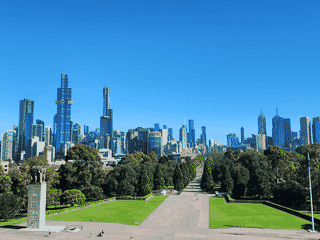
_as_seen_from_the_rooftop_of_Shrine_of_Remembrance.jpg)
Melbourne
Oceania · Australia
See also
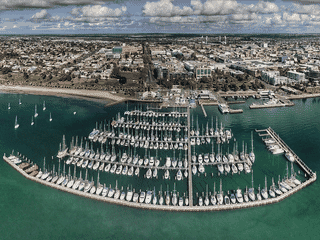

Geelong
Australia38.15°S 144.35°E · 14 m
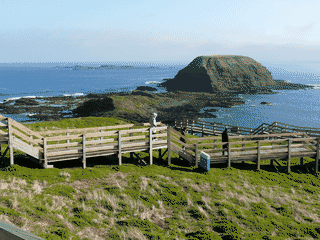

Phillip Island
Australia38.48°S 145.23°E · 29 m
Overview
Melbourne is Australia's cultural capital and second-largest city with 5.2 million residents, known for Victorian-era architecture, extensive museums, galleries, theatres, and large parks and gardens. The city consistently ranks among the world's most livable cities and attracts migrants from around the globe.
Languages: English
Why Go
Melbourne is Australia's cultural capital and second-largest city with 5.2 million residents, known for Victorian-era architecture, extensive museums, galleries, theatres, and large parks and gardens. The city consistently ranks among the world's most livable cities and attracts migrants from around the globe. Visitors come for major sporting events, world-class dining, and as a base for exploring Victoria's natural attractions including Grampians National Park, the Great Ocean Road, and Phillip Island's penguin parade. Melbourne is called 'Naarm' in the Woiworrung language of the traditional owners.
Adapted from Wikivoyage contributors · CC BY-SA 4.0
Climate
Melbourne's climate is notorious for its changeability, often called 'four seasons in a day'. Summer (December-February) averages 26°C with nights around 15°C, but heatwaves can push temperatures above 35°C and occasionally to 40°C. Winter (June-August) is cool, ranging from 0°C overnight to 19°C during the day, with limited snowfall. Spring and autumn offer pleasant temperatures in the 20s and are ideal for visiting. Melbourne receives approximately 600mm of rainfall annually, about half of Sydney's, with October typically the wettest month.
Adapted from Wikivoyage contributors · CC BY-SA 4.0
Get Around
Melbourne's CBD follows a grid system similar to Manhattan, making navigation straightforward. The city has a comprehensive public transport network of trams, trains, and buses. Trams criss-cross the city center, trains extend to outer suburbs, and buses cover remaining destinations. Cycling is popular with several dedicated trails including the Yarra River Trail, Capital City Trail through inner suburbs and Docklands, and the Bay Trail around Port Phillip Bay.
Adapted from Wikivoyage contributors · CC BY-SA 4.0
See and Do
Melbourne is Australia's best city for street art, with laneways covered in vibrant murals throughout the CBD. The Royal Exhibition Building in Carlton Gardens, built for the 1888 International Exhibition, is a World Heritage Site. The Cathedral Arcade features art deco architecture in the Nicholas Building. Most major attractions are in the CBD, easily reachable by public transport. The city serves as a good base for day trips to Victoria's regional attractions.
Adapted from Wikivoyage contributors · CC BY-SA 4.0
Learn
The Council of Adult Education (CAE) offers language classes, cafe book groups, drawing workshops, historical and foodie walks, and vocational courses including Victorian Certificate of Education preparation and computer or business classes. The CAE also houses the City Library where visitors can borrow books or read magazines in their cafe.
Adapted from Wikivoyage contributors · CC BY-SA 4.0
Work
Hospitality work around St Kilda is popular for working holiday makers. Fruit picking jobs are limited in greater Melbourne but dairy work and grape vine tending in the nearby Yarra Valley offer opportunities. Australia has the world's second-highest minimum wage after Denmark. Casual workers must receive at least 20% loading over the award wage. Working holiday and student visas may permit work with hour restrictions. A Tax File Number (TFN) is recommended when employed.
Adapted from Wikivoyage contributors · CC BY-SA 4.0
Buy
Shopping hours are typically 9AM-5:30PM weekdays and 9AM-5PM weekends, with Chadstone and other suburban centres open until 9PM on Thursdays and Fridays. Most supermarkets open 7AM-midnight or 1AM, with some operating 24 hours. Alcohol must be purchased from licensed venues or bottleshops by those 18+. Most bottleshops close by 10PM-midnight, though 24-hour bottleshops exist on Chapel Street (Stonnington) and Lygon Street (Melbourne).
Adapted from Wikivoyage contributors · CC BY-SA 4.0
Eat and Drink
Melbourne ranks among the world's best culinary destinations with abundant affordable, high-quality restaurants representing almost every cuisine. Eating out is cheaper than Western Europe but more expensive than North America. Tipping is not customary as service staff are well-paid. Key dining areas include Victoria Street in Richmond for Vietnamese food, Sydney Road in Brunswick for Middle Eastern and Turkish cuisine, and Acland Street in St Kilda for general dining. Local specialties include the halal snack pack (HSP), souvlaki and kebabs, and Japanese sushi. Melbourne distinguishes between 'bars' (small venues) and 'pubs' (larger establishments serving restaurant-quality food).
Adapted from Wikivoyage contributors · CC BY-SA 4.0
Stay Safe
The Australia-wide emergency number is 000, connecting to ambulance, fire department, and police services. Melbourne is generally a safe city for travelers, though standard urban precautions apply in certain areas.
Adapted from Wikivoyage contributors · CC BY-SA 4.0
Go Next
Melbourne serves as a central hub for Victoria's attractions. Regular trains depart Southern Cross station to regional destinations including Grampians National Park, the Great Ocean Road, and Phillip Island with its famous penguin parade. The V/Line regional rail network connects to towns across Victoria, while NSW Trainlink operates daily services to Sydney (approximately 11 hours) and The Overland runs twice weekly to Adelaide (approximately 11 hours).
Adapted from Wikivoyage contributors · CC BY-SA 4.0
Field guide adapted from Wikivoyage contributors · CC BY-SA 4.0. Text has been adapted and organized for this guide. About our sources.
Places to know
A few starting points from the guide. Check current hours and prices before you go.
- eat
Acland Street restaurants
Diverse quality restaurants and cafes in popular St Kilda tourist area
Adapted from Wikivoyage contributors
- eat
Hopetoun Tea Room
Classic tearoom with cakes on Collins Street
Adapted from Wikivoyage contributors
- eat
Queen Victoria Market prepared-food stalls
Popular open-air market with diverse affordable food options for breakfast and lunch
Adapted from Wikivoyage contributors
- eat
Sydney Road Middle Eastern restaurants
Lebanese, Greek, and Turkish restaurants in multicultural Brunswick and Coburg
Adapted from Wikivoyage contributors
- eat
Victoria Street Richmond Vietnamese restaurants
Concentration of affordable Vietnamese and Southeast Asian eateries
Adapted from Wikivoyage contributors
- see
Cathedral Arcade
Art deco ground floor arcade within the Nicholas Building featuring historic architecture
Adapted from Wikivoyage contributors
- see
Fitzroy Gardens
Historic gardens featuring the Avenue of English elm trees and Cooks' Cottage
Adapted from Wikivoyage contributors
- see
Royal Exhibition Building
World Heritage-listed building in Carlton Gardens, built for the 1888 International Exhibition
Adapted from Wikivoyage contributors
Before you go
Connectivity
Free WiFi available at McDonald's, City Library, and mag nation. Telstra Air hotspots near payphones. SIM cards available from major providers.
Emergency
Australia-wide emergency number is 000 for police, ambulance, and fire services.
Food
Melbourne is a world-class food destination. Eating out is cheaper than Western Europe. Victoria Street Richmond has affordable Vietnamese food; Sydney Road Brunswick has Middle Eastern cuisine.
Money
Australia has the world's second-highest minimum wage. Tipping is not expected. Most places accept credit cards. Cash is useful for markets and smaller vendors.
Transport
Melbourne has an extensive tram, train, and bus network covering the CBD and suburbs. The CBD uses a grid system similar to Manhattan, making navigation straightforward.
Weather
Melbourne is famous for 'four seasons in a day' weather. Pack layers year-round. Summer can exceed 40°C; winter drops to 0°C overnight. Spring and autumn are most pleasant.