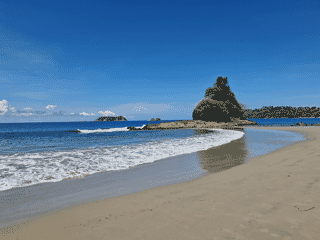

Manuel Antonio National Park
Mexico, Central America and the Caribbean · Costa Rica
Did you know?
- The Punta Catedral trail circles a peninsula.
- White-faced capuchins and sloths inhabit the coastal forest.
- The Perezoso trail leads to panoramic bay views.
See also
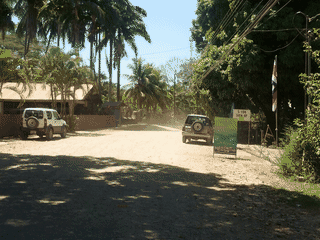

Dominical
Costa Rica9.25°N 83.87°W
Overview
Manuel Antonio National Park pairs Pacific shoreline with dense tropical forest. Marked paths offer chances to see capuchin monkeys, sloths and coastal scenery.
Languages: Spanish
Why go?
Manuel Antonio National Park is Costa Rica's smallest national park at just 16.24 km², yet in 2011 Forbes named it one of the 12 most beautiful parks in the world. The park combines Pacific coastline with dense tropical forest, offering the chance to spot white-faced capuchin monkeys, two-toed and three-toed sloths, coatis, and over 350 bird species from well-marked trails. It is easily reachable from San José in about 3 hours, making it the most-visited park in the country with over 150,000 annual visitors. However, the park has critics who call it overcrowded, overpriced at US$18 entry, and say the wildlife is harder to spot than in less-visited parks like Cahuita.
Adapted from Wikivoyage contributors · CC BY-SA 4.0
Get in
The park entrance is about 5 minutes' walk from the bus terminal in Manuel Antonio village. Quepos La Managua Airport sits 8 km away, with taxi fares into town running approximately US$20. The most common approach from San José is the daily bus service taking roughly 3 hours; some visitors prefer the shuttle services that many hotels arrange.
Adapted from Wikivoyage contributors · CC BY-SA 4.0
Fees and permits
Park entry costs US$18 per person (or US$2 with a Costa Rican residence card). Tickets must be purchased on the official SINAC website no later than the day before your visit. There is a cap of 600 visitors on weekdays and 800 on weekends; this only becomes an issue during Easter week and the last week of December when queues may form. Guided tours cost US$25 per person in larger groups or US$35 per person for small groups; guides are required to speak English and carry tripod-mounted spotting scopes that work with digital cameras.
Adapted from Wikivoyage contributors · CC BY-SA 4.0
Get around
Once in Manuel Antonio village, most hotels, restaurants, and the beach are reachable on foot, though there are no sidewalks and roads can be muddy in rainy season. A public bus runs along the single road to the beach for ₡315 (Costa Rican colón), though it may not accept US dollars. There are no street lights, so bring a flashlight for evening walks. The park itself is best explored on four short marked trails (1-3 km each), with the Perezoso trail leading to panoramic bay views and the Punta Catedral trail circling a peninsula.
Adapted from Wikivoyage contributors · CC BY-SA 4.0
When to go
The dry season runs December through March, offering sunny skies but higher visitor numbers and humidity. The wet season (May-November) sees fewer crowds and the vegetation explodes in vibrant green, though some trails become extremely muddy. September and October are the wettest months. Average high temperatures reach 33°C (92°F) year-round. Christmas, New Year, and Easter bring peak crowding and require advance ticket purchases.
Adapted from Wikivoyage contributors · CC BY-SA 4.0
Where to stay
Most accommodation clusters along the single road between Manuel Antonio village and the park entrance. Budget hostels and eco-lodges dominate, with mid-range options like El Faro Beach Hotel starting at US$70 per room with breakfast. Staying within walking distance of the park entrance is advisable for safety (dark roads, no sidewalks) and to avoid parking hassles. Quepos offers more budget-friendly accommodation options 7 km north.
Adapted from Wikivoyage contributors · CC BY-SA 4.0
Food and drink
No food or drinks are sold inside the park—bring everything you need and guard it against coatis and monkeys. Four picnic tables sit by the restrooms near the entrance, though an undisturbed lunch is not guaranteed with habituated wildlife around. Most hotels have full-service restaurants, and Manuel Antonio village has numerous casual eateries serving fresh seafood. A water faucet near the picnic tables dispenses slightly brackish well water; bring your own bottle and cups.
Adapted from Wikivoyage contributors · CC BY-SA 4.0
Things to do
Hiking four short trails (1-3 km) lets you explore the park independently; the Perezoso trail offers panoramic views and Punta Catedral circles a scenic peninsula. Wildlife watching with a guide costs around US$20-25 per person and is strongly recommended—guides carry high-quality optics and spotting scopes that work with digital cameras. Snorkeling at Playa Manuel Antonio reveals a coral reef with white sand; bring your own equipment. Fishing trips from Quepos target sailfish and marlin. The beach outside the national park (free entry) offers chair rentals, surfing, and massages.
Adapted from Wikivoyage contributors · CC BY-SA 4.0
Stay safe
Do not feed any wildlife—monkeys may steal bags and cameras, and feeding contributes to endangerment. The road from Quepos has many blind corners; use taxis or buses rather than walking, especially at night when a flashlight is essential. Con artists near the park sell fake tickets—only buy from the Coopealianza Bank at the entrance or online in advance. Crocodiles occasionally venture into swimming areas, and manchineel trees (beach apple) with toxic sap grow near the shore; avoid touching leaves or sheltering under them in rain. Manuel Antonio village has a party atmosphere at night where pickpocketing occurs.
Adapted from Wikivoyage contributors · CC BY-SA 4.0
Go next
The Tárcoles Crocodile Bridge (Puente Río Tarcoles) lies about halfway between San José and Manuel Antonio—a mandatory stop to photograph massive crocodiles basking on the riverbank. Carara National Park, accessible from the same road, is famous for scarlet macaw sightings. Quepos, 7 km north, serves as the regional hub with more accommodation, restaurants, and the marina for fishing charters and boat trips.
Adapted from Wikivoyage contributors · CC BY-SA 4.0
Field guide adapted from Wikivoyage contributors · CC BY-SA 4.0. Text has been adapted and organized for this guide. About our sources.
Places to know
A few starting points from the guide. Check current hours and prices before you go.
- sleep
El Faro Beach Hotel
Authentic shipping containers have been stylishly transformed into a unique eco-friendly hotel with private balconies and unparalleled views.
Recorded price: Starting at US$70 per room plus tax including breakfast
Adapted from Wikivoyage contributors
- do
Park tour
With a guide.
Adapted from Wikivoyage contributors
- buy
Regalame Art Gallery
Quality souvenirs and local art at Hotel Si Como No, though prices are on the higher side.
Adapted from Wikivoyage contributors
Before you go
Connectivity
WiFi is available at most hotels and restaurants in Manuel Antonio village. Mobile coverage is good for Claro and Kolbi networks.
Money
US dollars are widely accepted in Manuel Antonio for park fees, hotels, and most restaurants. Bus fare (₡315) is better paid in colón. Credit cards work at larger establishments but carry a small surcharge.
Packing
Bring water, snacks, sunscreen, and cash for entry. Water shoes are useful for rocky trails. A flashlight is essential for night walks. Snorkeling gear can be brought from home or rented outside the park.
Safety
Do not feed monkeys or other wildlife—they have become aggressive toward visitors with bags. Wear water shoes on muddy trails, use flashlights at night, and watch for crocodiles in the water.
Transport
Public buses run from Quepos to Manuel Antonio for ₡315. Taxis from Quepos airport cost about US$20. The park entrance is a 5-minute walk from the village bus stop.
Weather
Dry season December-March is most popular but crowded; wet season (May-November) brings fewer visitors and lusher vegetation but muddy trails. Average highs are 33°C year-round.