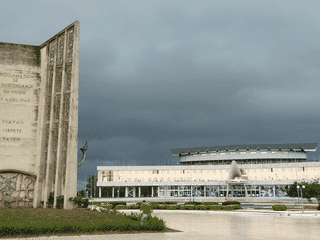

Lomé
Africa · Togo
See also
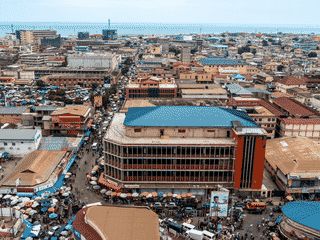

Accra
Ghana5.55°N 0.22°W · 61 m
Porto-Novo
Benin6.48°N 2.62°E · 38 m
Overview
Lomé is Togo's economic and cultural heart, home to nearly 2.2 million people—about a quarter of the nation's population. The city offers a rare blend of French colonial architecture, bustling West African markets, and Gulf of Guinea beaches, all at backpacker-friendly prices.
Languages: French
Why go?
Lomé is Togo's economic and cultural heart, home to nearly 2.2 million people—about a quarter of the nation's population. The city offers a rare blend of French colonial architecture, bustling West African markets, and Gulf of Guinea beaches, all at backpacker-friendly prices. It's particularly notable for its voodoo fetish markets, which draw curious travelers, and a nightlife scene that comes alive on weekends when locals dress to the nines.
Adapted from Wikivoyage contributors · CC BY-SA 4.0
Understand
Founded in the 19th century by Ewe people, Lomé grew into a major trading port under German rule (becoming capital of Togoland in 1897) and later French administration after WWI. The 1975 Lomé Convention between the European Economic Community and African, Caribbean, and Pacific states cemented the city's international significance. The climate is hot year-round, with temperatures ranging from 23-33°C and heaviest rainfall from May to October.
Adapted from Wikivoyage contributors · CC BY-SA 4.0
Get in
The main border crossing from Ghana is Aflao, less than 2 km from the city centre. Visa on arrival is available at both the airport and land border for CFA 10,000-15,000 depending on nationality, valid for one week and extendable for a month at no extra charge. As of January 2019, you can obtain a 3-month visa at the Ghana border for 705 Ghana cedis (US$145). Lomé–Tokoin International Airport has nonstop flights from cities in Africa, Europe, and North America, with Ethiopian Airlines operating flights from Newark.
Adapted from Wikivoyage contributors · CC BY-SA 4.0
Get around
Motos are the most practical option for short distances, typically costing CFA 300. Taxis can be rented from around CFA 500, with CFA 2,000 getting you anywhere in town. Route taxis cost CFA 200-400 but are difficult for visitors to navigate. The Gozem app is the most in-demand option for booking motorcycles, tuk-tuks, and cars at prices significantly cheaper than street negotiations. The Boulevard Circulaire (le 13 Janvier) is the main artery through downtown, running from the beach in Kodjoviakope to the beach in Bea.
Adapted from Wikivoyage contributors · CC BY-SA 4.0
When to go
The dry season from November to March offers the most comfortable weather for sightseeing, with temperatures in the high 20s to low 30s°C. The long rainy season runs from May to October, with August being the wettest month (180mm rainfall). Beach activities are best enjoyed during the dry season, though Lomé's indoor attractions and markets are accessible year-round.
Adapted from Wikivoyage contributors · CC BY-SA 4.0
Where to stay
Decent mid-range hotels in northern Lomé cost around CFA 15,000-16,000 per night. Budget options with fan or air-conditioning exist in Kodjoviakope, ranging from CFA 7,000-15,000, such as My Diana's or the very budget Mammy's near the Angolan Embassy (CFA 3,500 per room for 2-3 people). Beachfront luxury properties like Hotel 2 Fevrier and Hotel Sarakawa start at CFA 100,000 per night. Kodjoviakope and surrounding areas offer the best value for backpackers.
Adapted from Wikivoyage contributors · CC BY-SA 4.0
Food and drink
Local street food is abundant, with a large plate of rice or paté costing just CFA 200. Lebanese restaurants (try Al Mohatas on Route de Kpalime or Al Sultan's in Kodjoviakope) offer plates for CFA 1,000-2,000. Two Chinese restaurants operate in Kodjoviakope and Asigame. For upscale dining, the Akwaba Pool Bar and Grill at Hotel 2 Fevrier or Le Namiélé (Sunday brunch buffet for CFA 25,000) provide classy experiences. Local drinks include Tchouk (millet beer, CFA 100 per calabash), Deha (palm wine), and the potent Sodabe (tubing hooch).
Adapted from Wikivoyage contributors · CC BY-SA 4.0
Things to do
Key attractions include the Independence Monument (across from the National Museum), the Sacred Heart Cathedral built in 1902 where Pope John Paul II celebrated mass in 1985, and Le Palais de Lomé (CFA 2,000-7,000) with its botanical gardens and Gulf of Guinea views. The Togo National Museum (CFA 1,500) showcases arts and traditions, while the Musée International du Golfe de Guinée (CFA 3,000, Monday-Saturday 08:00-17:00) displays masks dating to the 14th century. Beach lovers can head to Marcelo Beach or Royal Beach a few kilometers east of the center. Lake East and Lake West offer pleasant walking areas near the city center.
Adapted from Wikivoyage contributors · CC BY-SA 4.0
Buy
Lomé's markets are major attractions. The Grand Marché has a large 3-storey hall selling everything from red peppers and dried fish to traditional medicines and travel bags, with the Nana Benz section on the first floor noted for clothing. The smaller Fetish Market (CFA 3,000 entrance; CFA 2,000 for photos) specializes in voodoo fetishes, gongons, and gris-gris. The Centre Artisanal offers wooden carvings, clay pots, authentic fabrics, local paintings, and African clothing—bargaining is expected everywhere.
Adapted from Wikivoyage contributors · CC BY-SA 4.0
Nightlife
Lomé comes alive at night, with locals dressing elegantly for outings to numerous bars and discothèques. Two of the best (and priciest) clubs are Privilege (attached to Palm Beach hotel) and 7Clash (in Dekon on the Boulevard). For a relaxed evening, head to the beach near the Ghana border where seating is plentiful and Castle Milk Stouts are served cold. Western-style dance clubs cluster downtown. Be aware that the beach area is considered the most dangerous part of the city after dark.
Adapted from Wikivoyage contributors · CC BY-SA 4.0
Stay safe
Beaches and surrounding areas are known for frequent muggings, especially at night. Do not wander alone on the beach after dark unless large crowds are present. Standard urban precautions apply—keep valuables secure, avoid displaying wealth, and use registered taxis or the Gozem app for transportation at night.
Adapted from Wikivoyage contributors · CC BY-SA 4.0
Connect
Internet cafés are cheap but feature slow computers and connection speeds—expect to pay a couple of US dollars per hour. If staying in Kodjoviakope, Ghana cell cards work perfectly there. Togo's mobile network is adequate for basic connectivity in the city center.
Adapted from Wikivoyage contributors · CC BY-SA 4.0
Go next
The Aflao border crossing to Ghana is less than 2 km from the city center, making it easy to continue west into Ghana. Other destinations in Togo include the Kpalimé region to the north (known for hiking and waterfalls) and the village of Kpalimé itself, a popular weekend destination for expats living in Lomé.
Adapted from Wikivoyage contributors · CC BY-SA 4.0
Field guide adapted from Wikivoyage contributors · CC BY-SA 4.0. Text has been adapted and organized for this guide. About our sources.
Places to know
A few starting points from the guide. Check current hours and prices before you go.
- sleep
Auberge Le Galion
Double rooms with ensuite bathroom. Walking distance to the Aflao border crossing. Safe neighbourhood, nice relaxed atmosphere with occational live music. Popular with expats.
Recorded price: CFA 7000-15000 (fan/air-con)
Adapted from Wikivoyage contributors
- sleep
Hotel 2 Fevrier
Luxury hotel and the highest building in the country.
Adapted from Wikivoyage contributors
- sleep
Hotel Aurore
Budget beachfront option with restaurant, hot tub, patio, and garden setting.
Recorded price: ~US$18/night
Adapted from Wikivoyage contributors
- sleep
Hotel Aurore, Restaurant, Bar
Close to beach with restaurant hot tub, attractive patio/bar and garden setting. Rather basic rooms but very budget priced ~US$18/night.
Adapted from Wikivoyage contributors
- sleep
Hotel Le Benin
French-run and the food is excellent.
Adapted from Wikivoyage contributors
- sleep
Hôtel Napoléon Lagune / Restaurant / Bar
Relaxed garden-like setting with a pool and restaurant right next to Lac Est (Lake East). Has nice decor. Some have complained about mosquitoes and TV not working, etc. Seems affordable at around US$28/night.
Adapted from Wikivoyage contributors
- sleep
Hôtel Résidence Océane
Adapted from Wikivoyage contributors
- sleep
Mammy's
Ultra-budget option near the Angolan Embassy for the cost-conscious traveler.
Recorded price: CFA 3,500 per room
Adapted from Wikivoyage contributors
Before you go
Connectivity
Internet cafés offer slow but cheap access (a few USD per hour). Ghana SIM cards work in Kodjoviakope. Togo cell networks cover the city center.
Money
The CFA franc (XOF) is used throughout Togo. Credit cards are rarely accepted outside upscale hotels. ATMs are available but may not work with foreign cards—carry sufficient cash for daily expenses.
Safety
Beach areas are dangerous after dark—avoid wandering alone at night. Use registered transportation and keep valuables secure in crowded areas.
Transport
Motos (CFA 300) are the quickest way around town. Use Gozem app for transparent pricing. Route taxis (CFA 200-400) are cheapest but confusing for non-locals.
Visa
Visa on arrival costs CFA 10,000-15,000 depending on nationality. Valid for one week, extendable to one month free of charge. Longer visas available at Ghana border.
Weather
Hot and humid year-round (23-33°C). Dry season (November-March) is most comfortable for sightseeing. Heavy rains May-October.