Linz
Western Europe · Austria
Did you know?
- The Pöstlingbergbahn climbs from Hauptplatz toward a hilltop pilgrimage church.
- Ars Electronica Center explores the intersection of art, technology and society.
- Austria's third-largest city sits on the Danube.
See also
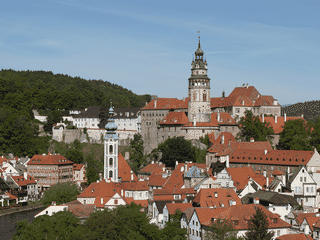

Český Krumlov
Czechia48.81°N 14.32°E · 492 m
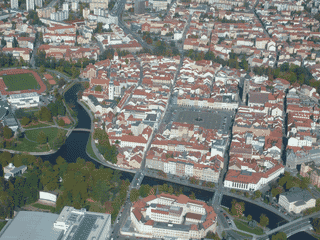

České Budějovice
Czechia48.97°N 14.47°E · 395 m
Overview
Linz sits on the Danube and serves as the capital of Upper Austria. It lies midway between Salzburg and Vienna.
Languages: German
Why Go?
Linz is Austria's third-largest city and the capital of Upper Austria, sitting on the Danube midway between Salzburg and Vienna. Though historically known as a steel city, it transformed into a cultural hub with Ars Electronica Festival and Center, earning European Capital of Culture status in 2009 and UNESCO City of Media Arts designation in 2013. The picturesque old town features Austria's largest central square (Hauptplatz) surrounded by impressive Baroque architecture, offering a more relaxed alternative to Austria's more touristed cities.
Adapted from Wikivoyage contributors · CC BY-SA 4.0
Get In
Linz is accessible by air via Blue Danube Airport (LNZ) on Flughafenstraße 1, with bus service to the city center taking about 20 minutes and costing around €3. Taxis charge approximately €25-30. Alternatively, take the train to Horsching station (€1.80) and a free shuttle bus to the airport. By rail, Linz Hauptbahnhof on Bahnhofplatz offers hourly Railjet Express, Railjet, and Westbahn connections to Salzburg and Vienna, with ticket offices open daily 06:00-21:00 and machines available 24 hours.
Adapted from Wikivoyage contributors · CC BY-SA 4.0
Get Around
Linz has an excellent public transport network operated by Linz AG, covering trams and buses with maps and online timetables available on their website. A one-day ticket costs €6 for travelers over 14 years old and €3 for children. The 4-stop mini-ticket is €1.50. Tickets can be purchased from electronic vending machines at each stop or at tobacco and newspaper shops.
Adapted from Wikivoyage contributors · CC BY-SA 4.0
When to Go
Linz hosts major cultural events year-round, most notably the Ars Electronica Festival with international media attention and the annual Klangwolke ("sound-cloud") in September—a large open-air cultural spectacle featuring modern and traditional music with a massive light show. Nearly all retail stores close on Sundays, though small shops at the main train station remain open. The Grotto Railway inside imperial fortifications is a notable indoor attraction, while summer brings extended hours at the Botanic Gardens (07:30-19:30 in May-August).
Adapted from Wikivoyage contributors · CC BY-SA 4.0
Where to Stay
Accommodation options range from budget chains like Ibis Linz City (Klaudia) and Arcotel Nike near the Danube to mid-range hotels such as Hotel Mühlviertlerhof on Graben 24-26 and Austria Trend Hotel Schillerpark. For a unique stay, Das Park Hotel in nearby Ottensheim (10 km west) offers automated concrete drain tubes with beds from May through October, using an honor-based pricing system. The Hotel Am Domplatz offers a central business hotel option at Domplatz 5.
Adapted from Wikivoyage contributors · CC BY-SA 4.0
Food and Drink
Linz's signature pastry is the Linzer Torte, a lattice-covered cake filled with fruit, available at Jindrak on Herrenstraße 22-24 (M-Sa 8AM-6PM). For quick meals, luncheonettes serve Chinese food, kebab, pizza, and Austrian snacks like Bratwürstel with Sauerkraut, Leberkäse, and Bosna (a hot-dog with curry-ketchup-onion sauce). Leberkäse Pepi on Rathausgasse 3 is renowned for its quality. For dining, Klosterhof on Landstraße 30 offers traditional Austrian cuisine with a large beer garden, while Alte Welt at Hauptplatz 4 provides Austrian to Mediterranean dishes at reasonable prices (€7 lunch).
Adapted from Wikivoyage contributors · CC BY-SA 4.0
Things to Do
Linz offers diverse attractions: the New Cathedral (Mariendom) with its 134-m tower—Austria's largest church accommodating 20,000 worshippers—is open Jun-Sep Tu-Su 10:00-13:00, 14:00-17:00. The Lentos Museum of Modern Art features a striking illuminated glass façade and works by Klimt, Schiele, and Kokoschka (€8 adults). The Ars Electronica Center explores technology through art with hands-on exhibits (€8 adults). History enthusiasts can visit the Schlossmuseum Linz in Linz Castle (€6.50 adults) or the Mauthausen concentration camp memorial (free, 20 minutes by train). Sports fans can catch LASK or FC Blau-Weiß Linz matches in the Austrian Bundesliga. For family outings, the Pöstlingbergbahn tram climbs to Linz Zoo (€4.50 adults) and the pilgrimage basilica with panoramic views.
Adapted from Wikivoyage contributors · CC BY-SA 4.0
Safety
Linz is generally a safe city. Standard urban precautions apply—watch for pickpockets in crowded areas and near the main train station. The article notes that smoking remains common in Austrian bars and pubs, which may be a consideration for non-smokers.
Adapted from Wikivoyage contributors · CC BY-SA 4.0
Connectivity
Linz has 4G coverage from all Austrian carriers. As of September 2021, some areas of the city have 5G coverage, though it remains patchy. The article does not provide specific SIM card pricing or provider details.
Adapted from Wikivoyage contributors · CC BY-SA 4.0
Budget
A backpacker budget in Linz should account for: dorm beds in hostels (approximately €25-40/night), meals at luncheonettes or kebab shops (€5-10), public transport with a one-day ticket (€6), and attraction entrance fees ranging from free (Ars Electronica Center free for children under 6) to €8 for major museums. Drinking costs are moderate outside the city center. The Linz Card offers free public transport and museum discounts.
Adapted from Wikivoyage contributors · CC BY-SA 4.0
Day Trips
The Salzkammergut region to the south offers picturesque lakes and mountains, with notable towns including Gmunden, Bad Ischl, Hallstatt, and Bad Aussee. To the west lies Salzburg. For history-focused travelers, the Mauthausen concentration camp memorial is accessible by the fastest trains (20 minutes from Linz) or by buses 361 and 362 (March-October). Czech Republic destinations like České Budějovice and Prague are reachable by train from Linz, making this a good stepping-off point for Southern Bohemia.
Adapted from Wikivoyage contributors · CC BY-SA 4.0
Etiquette
Austrian culture values punctuality and formal greetings. Dress modestly when visiting churches—cover shoulders and knees. Tipping is customary in restaurants (5-10% rounding up is typical). Smoking remains prevalent in bars and pubs, though some venues have non-smoking areas.
Adapted from Wikivoyage contributors · CC BY-SA 4.0
Go Next
By train or car, explore Upper Austria's neighboring cities: Traun, Wels, and Steyr. The A1 motorway leads west to Salzburg and east toward St. Pölten with stops at Vöcklabruck and Amstetten. Southbound routes via A7 head toward Freistadt. The scenic B1 and B3 roads connect to similar destinations. For international travel, direct trains go to České Budějovice and Prague in the Czech Republic. Shuttle services to Český Krumlov cost approximately €16-19 per person (1.5 hours).
Adapted from Wikivoyage contributors · CC BY-SA 4.0
Field guide adapted from Wikivoyage contributors · CC BY-SA 4.0. Text has been adapted and organized for this guide. About our sources.
Places to know
A few starting points from the guide. Check current hours and prices before you go.
- eat
Alte Welt
The name ("Old World") suits this restaurant and bar perfectly. The entrance is in a small courtyard, with seemingly uncontrolled growing plants. The inside reminds of an inn from former times. The often changing menu ranges from typical Austrian dishes to mediterranean cuisine, at a reasonable price. A variety of cultural events take place in the wine cellar.
Recorded price: €7 for lunch
Adapted from Wikivoyage contributors
- eat
Big Joe Falafel
Serving tasty falafel sandwiches. The other food of the menu is terrific too. In addition, the operators are super nice.
Adapted from Wikivoyage contributors
- eat
Don
Very good sushi restaurant. Also has other good Chinese food. The portions are quite large.
Adapted from Wikivoyage contributors
- eat
Gelbes Krokodil
The Yellow Crocodile is next to/a part of the Moviemento Cinema, downstairs below street level. It has special vegetarian plates.
Adapted from Wikivoyage contributors
- eat
Gösserkeller
Classic Austrian dishes like Beuschel, roast pork and schnitzel. The host very friendly.
Adapted from Wikivoyage contributors
- eat
Jindrak
A pastry shop serving the local speciality Linzer Torte (a cake).
Adapted from Wikivoyage contributors
- eat
Klosterhof
Traditional Austrian cuisine, big beer garden
Adapted from Wikivoyage contributors
- eat
Leberkäse Pepi
You can get Leberkäse pretty much in every supermarket, but it's hard to find a place that serves as tasty and as various ones as here. It is a bit more expensive than in supermarkets, but the bread roll with Leberkäse is still low-priced. There is another store in the central train station.
Adapted from Wikivoyage contributors
Before you go
Connectivity
4G available from all Austrian carriers; 5G coverage is patchy as of 2021. WiFi available at cafes and public spaces.
Culture
Linz hosts Ars Electronica Festival annually and Klangwolke in September. The city was European Capital of Culture in 2009 and UNESCO City of Media Arts since 2013.
Food
Try the Linzer Torte (available at Jindrak, Herrenstraße 22-24). For quick meals, luncheonettes serve Austrian snacks like Leberkäse and Bosna. Most restaurants close Sunday evenings.
Shopping
Nearly all retail stores close on Sundays except small shops at the main train station. The Taubenmarkt is a notable shopping area.
Transport
Linz has excellent public transport with one-day tickets (€6) and mini-tickets (€1.50 for 4 stops). Blue Danube Airport is 20 minutes from the city by bus (€3) or taxi (€25-30).