
Kinshasa
Africa · DR Congo
Did you know?
- Lola ya Bonobo shelters orphaned bonobos in a dedicated sanctuary.
- A sandbank barbecue on the Congo River is reached by rented boat.
- Transco buses operate 33 lines across the city-province.
See also
Overview
Kinshasa is a vast Congo River capital where museums, music, nightlife, and dense urban energy meet. It offers memorable cultural experiences, but travelers need deliberate transport and local support.
Languages: French, Kikongo, Lingala, Tshiluba, Swahili
Why Go
Kinshasa is the capital of the Democratic Republic of the Congo, facing Brazzaville across the Congo River. With nearly 15 million residents (2020), it ranks as Africa's third-largest metropolitan area after Cairo and Lagos, and claims the title of the world's largest French-speaking city. Once a leading modern African city, Kinshasa is now remarkably restoring its infrastructure after decades of armed conflicts, with Chinese companies involved in reconstruction projects throughout the city.
Adapted from Wikivoyage contributors · CC BY-SA 4.0
Getting In
N'djili International Airport is the main gateway, served by South African Airways, Kenyan Airways, Ethiopian Airlines, and Royal Air Maroc from their hubs in Johannesburg, Nairobi, Addis Ababa, and Casablanca. European connections include Air France from Paris, Brussels Airlines from Brussels, and Turkish Airlines from Istanbul. Kinshasa East railway station (Gare de l'Est), located at the eastern end of Boulevard Du 30 Juin, serves as the main train station with Place du 30 Juin in front.
Adapted from Wikivoyage contributors · CC BY-SA 4.0
Getting Around
Kinshasa is notorious for huge traffic jams that can take up to 2 hours to travel 500m; avoid commuting hours. The local Transco bus service runs 33 lines across the city-province. The informal taxi system uses small buses on set routes between departure points, costing around 350 francs per segment. Hand gestures signal direction at stops; French or Lingala is essential as drivers speak no English. Traditional taxis for hire are available for single runs or daily hire. Hiring a private chauffeur is common practice for foreigners.
Adapted from Wikivoyage contributors · CC BY-SA 4.0
When To Go
Kinshasa has a dry season from June to September when temperatures are a few degrees lower than during the rainy season. The wet season brings higher rainfall, particularly in November (247mm) and April (238mm). The driest months are July and August with only 2-5mm of rainfall.
Adapted from Wikivoyage contributors · CC BY-SA 4.0
Where To Stay
Accommodation in Kinshasa is very expensive due to limited international-standard options. The Memling and Grand hotels have a virtual monopoly at these standards, with prices often exceeding $300 per night plus breakfast. More affordable options include Hotel Pour Vous (from $59 USD), Léon Hôtel Kinshasa (from $60 USD), and Hotel Platinum (from $99 USD). Budget-conscious travelers should expect to pay significantly more than in neighboring countries.
Adapted from Wikivoyage contributors · CC BY-SA 4.0
Food And Drink
Expatriate restaurants accept dollars but are very expensive, with pizzas costing up to $20 and hotel meals reaching $40. Local cuisine is more affordable. Drinking venues include Matonge, Bandal, and Bonmarche districts known for dancing bars, restaurants, and nightclubs. Local beers include Primus, Skol, Turbo King (darker), and Tembo (amber ale ranked highest for DRC beer). Portuguese wine is available cheaply at expat-oriented grocery stores.
Adapted from Wikivoyage contributors · CC BY-SA 4.0
Things To Do
Must-do activities include a barbecue on a sandbank on the Congo River (boat rental around $150 at Yacht Club Kinshasa), walking along the river in front of British and German embassies, Sunday church services, and experiencing local nightclubs. Lola ya Bonobo is the world's only sanctuary for orphaned bonobos, located at Les Petites Chutes de la Lukaya. The National Museum of the Democratic Republic of Congo, reopened in new premises in June 2019, hosts ethnographic objects. Limete Tower, one of Africa's tallest buildings, was finally completed in 2011.
Adapted from Wikivoyage contributors · CC BY-SA 4.0
Safety
It is strongly recommended to have a local companion at all times except while in your hotel. Be careful with cameras and video equipment; avoid photographing police, government buildings, and UN personnel. When approached by people claiming to be police, verify they are in uniform; fake police officers in unmarked vehicles have targeted UN staff and lone drivers, forcibly robbing victims. Lock car doors before driving and keep valuables out of sight. Never drive alone, especially after dark. Mosquitoes are a year-round problem requiring malaria medication.
Adapted from Wikivoyage contributors · CC BY-SA 4.0
Connectivity
Plenty of cyber cafes exist throughout the city. Local SIM cards are easily purchased at many locations including Pullman Grand Hotel, which has Airtel, Orange, and Vodacom stores. Power outlets follow European Type C/F standards.
Adapted from Wikivoyage contributors · CC BY-SA 4.0
Budget
Kinshasa is expensive for backpackers. Mid-range hotels start at $59-99 USD per night. Restaurant meals at expat establishments cost $15-40. Budget transport via shared taxis costs around 350 francs between stops. ATM access exists but withdrawal limits and fees vary. Budget approximately $80-150 USD per day for basic comfort, excluding accommodation.
Adapted from Wikivoyage contributors · CC BY-SA 4.0
Etiquette
Lingala is the local language spoken beyond French, and learning basic phrases goes a long way to befriending locals. French is the lingua franca in government and business, especially in Gombe commune (business district). Knowledge of languages other than French, Lingala, and tribal languages is extremely limited.
Adapted from Wikivoyage contributors · CC BY-SA 4.0
Go Next
The Chutes de Zongo waterfalls in Bas Congo are impressive day-trip destinations. Boats connect Kinshasa to Brazzaville across the river, the capital of the neighboring Republic of Congo. Regional transport includes the railway station for train travel.
Adapted from Wikivoyage contributors · CC BY-SA 4.0
Field guide adapted from Wikivoyage contributors · CC BY-SA 4.0. Text has been adapted and organized for this guide. About our sources.
Places to know
A few starting points from the guide. Check current hours and prices before you go.
- sleep
Faden House
A small guesthouse across the street from Grand Hotel. Great location in Gombe, a block away from the River Congo (great walking/jogging route) and many of the European embassies. About the same price as the Grand Hotel, but here the price includes free wifi in all the rooms. A calm oasis in Kinshasa. Some English spoken. Only 9 rooms (avoid rooms 1 and 3). Also a well-used conference facility, and the quality of service deteriorates when staff are occupied with a function. There are small fridges in the rooms, but no safe deposit facility, and only a couple of French/Congolese TV channels.
Adapted from Wikivoyage contributors
- sleep
Fleuve Congo Hotel
Renovated in 2012, Fleuve is now one of the most luxurious hotels in town.
Adapted from Wikivoyage contributors
- sleep
Hotel Elais
Pool with diving board.
Adapted from Wikivoyage contributors
- sleep
Hotel Memling
Probably the best and second most expensive hotel in town. Has been around since 1937, and has since then maintained its place as the city's Number One venue on this side of the river. Wireless Internet throughout, nice but small pool, bar and restaurants, good Belgium food. Expect to pay US$300/night plus $28 for breakfast and $30 for 24 hour access to Internet ($75 for week). Hertz car rental are at the hotel, along with mobile phone companies, gift shops and the usual souvenirs. Excellent conference facilities, the hotel is located within 5 to 10 minutes of the city's main business and political ventures.
Adapted from Wikivoyage contributors
- sleep
Hotel Platinum
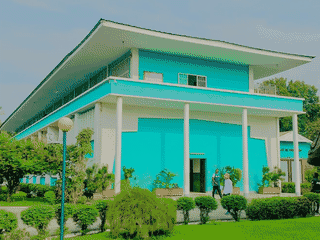
Pink structure
Recorded price: US$99
Adapted from Wikivoyage contributors
- sleep
Hotel Pour Vous
Outdoor pool and patio.
Recorded price: 59 USD
Adapted from Wikivoyage contributors
- sleep
Hotel Royal
4-star. Expect to pay US$270/night Bed &Breakfast, with Wifi, tea coffee and water complimentary. Restaurant, cafe, cigar lounge, conference centre, in the city centre next to Brussels Airlines office.
Adapted from Wikivoyage contributors
- sleep
Ledya Pyramide Hotel
Hotel Pyramide is a small, but luxury hotel, about 5 km out of the city centre. All rooms have a bathroom with Jacuzzi, warm water, hairdryer and a fridge. In March 2008 however, there was only cold water available and in insufficient quantities to take a proper shower or bath. Most rooms are spacious (some are like a small apartment) and dispose of flatscreen TVs and one or two air-conditioning units.
Adapted from Wikivoyage contributors
Before you go
Connectivity
Cyber cafes are plentiful. Local SIM cards (Airtel, Orange, Vodacom) are easily purchased. European Type C/F power plugs are standard.
Culture
Lingala is the local language; French is the official language. Learning basic Lingala phrases earns goodwill from locals.
Health
Do not drink tap water. Bottled water is available but sometimes expensive. Yellow fever vaccination is required. Malaria medication is essential year-round due to mosquito prevalence.
Money
The local currency is Congolese franc. Dollars are widely accepted at hotels and expat establishments. ATMs are available but may have limits.
Safety
Crime is a concern, particularly against foreigners. Always travel with a trusted local companion. Fake police checkpoints target lone drivers. Lock vehicle doors while driving.
Transport
Traffic jams are severe; allow extra time for travel. Shared taxis cost around 350 francs between stops. Private taxis and hired chauffeurs are common for foreigners.
Weather
Dry season runs June-September with cooler temperatures. Rainy season brings significant rainfall November-April.