
Overview
Faro's cobbled old town is compact enough to explore on foot. The harbor is a starting point for boat trips into Ria Formosa.
Transit Hub · Architecture · Beach · History
Did you know?
- Human bones from a former monks' graveyard decorate the chapel inside Igreja do Carmo.
- Harbor departures connect visitors with Ria Formosa by boat.
- The cathedral tower offers views across the old town.
Where it is
Faro is 164 km west of Jerez de la Frontera.
Why Go
Faro is the southernmost city in mainland Portugal, serving as the Algarve's main transport hub with an international airport. In summer it draws sun-seeking tourists from northern Europe and the UK, while outside peak season it reverts to a peaceful, charming small city. It offers a well-preserved old town with cobblestone streets, nearby Ria Formosa nature reserve, and easy access to beaches without the crowds of busier resort towns.
Get In
Faro Airport (FAO) is the principal route into the Algarve with budget flights from across Europe, especially the UK and Ireland, plus Air Transat from Toronto. TAP flies from Porto and Lisbon. Local buses 14 and 16 run every 30 minutes from downtown to the airport and continue to Praia de Faro beach. Bus connections from Lisbon (€18-19, 3-4 hours) and Porto operate daily via Rede Expressos or Flixbus, with direct services from Madrid and Seville also available.
Get Around
Faro's old town (Centro Histórico) is compact and walkable, with cobblestone streets best explored on foot. The bus station is at the edge of the city centre. Local buses 14 and 16 connect downtown to the airport and beach. Boat trips to Ria Formosa depart from the harbor area.
When To Go
Summer (June-August) brings the most tourists and highest temperatures, with Faro's beaches busy with visitors. Spring (April-May) and autumn (September-October) offer milder weather, fewer crowds, and lower accommodation prices. Many establishments outside the tourism sector close during the low season (November-March). The city gains in peacefulness during off-peak months while retaining its charm.
Where To Stay
Faro has a thriving trade in package deal hotels and short-term apartment rentals, with locals renting spare rooms to travelers. Book months in advance for high season as many places close during low season. Budget options include Hostel Casa d'Alagoa (old town, beach access by boat) and Hostel 33 (4-, 6-, 8-bed dorms in the old town). Mid-range options include Hotel Mónaco near the airport (€45-70) and Faro Lounge Guesthouse with dorms. Upscale choices like Eva Senses Hotel (from €110/170 low/high) and Hotel Faro & Beach Club (from €95/170 low/high) overlook the harbor.
Food And Drink
Faro's restaurant scene ranges from budget-friendly daily menus to upscale dining. For value, try Restaurante Travessa (€11 set menu), Snackbar El Sombrero near the bus station (€5-15), or Restaurante Sal e Pimenta hidden on Rua do Montepio (€5-10). Miminhos Caseiros offers authentic local cuisine (€10-15), while Tasquinha Cruzeiro serves nice fried calamari (€15-25). For vegetarians, A Venda offers Portuguese tapas with good wine selection. Upscale options include Restaurante Alameda and Pigs and Cows (€50+). The main bar and cafe street is Rua do Prior, with Bar CheSsenta open late.
Things To Do
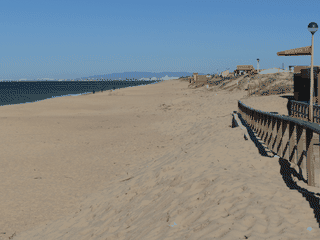
The Bone Chapel (Capela dos Ossos, €2) inside Igreja do Carmo is almost completely made of bones from a former monk graveyard. The Cathedral (Sé) tower offers views over the old town and Rio Formosa (€5). The Old Town features 18th-century Portuguese and Moorish-influenced architecture with cobblestone streets. Ria Formosa National Park offers boat trips, birdwatching, kayaking, and eco tours departing from Faro and Olhão. Faro beach (Praia de Faro) is several kilometres long and rarely crowded, accessible by airport bus. History enthusiasts can visit the Faro Jewish Heritage Centre (free entry, Mon-Fri 09:30-17:00), the only remaining vestige of post-Inquisition Jewish presence in Portugal. Football fans can catch SC Farense matches at Estádio de São Luís.
Buy
The Faro Municipal Market (Mercado Municipal, Mon-Sat 07:00-15:00) offers local produce with a supermarket and cafes in the same building. Supermarkets include Algartalhos and Minipreço in the city centre, Pingo Doce at Tridente, plus larger Auchan and Continente stores. Forum Algarve (2 km from downtown, stores 10:00-23:00) is a shopping mall with about 100 stores, hypermarket, cinema, and food court.
Connect
As of January 2025, Faro and its approach roads have 4G coverage from Digi, and 5G from MEO, NOS, and Vodafone. Most hotels and cafes offer free WiFi. Portugal uses Type F power sockets with 230V/50Hz.
Stay Safe
Faro and the Algarve are reasonably safe year-round. Pickpockets are not unheard-of, especially near beaches at night. The area attracts some poorly-mannered tourists (particularly from the UK, Netherlands, and Germany) who come to drink, so exercise caution at night. Police presence is generally good at maintaining order.
Go Next
Faro serves as a convenient base for exploring the Algarve and beyond. Bus connections to Seville (Spain) make it a logical stop between Lisbon and Andalusia. Nearby destinations include Tavira, Lagos (for dramatic coastline), Silves (historic castle town), Sagres (southwestern tip of Europe), and Serra de Monchique (mountain scenery). Quinta do Lago golf resort is 17 km away. The village of Estoi, 10 km north, features the Roman Ruins of Milreu and the 19th-century Estoi Palace now operating as a luxury hotel.
Guide text adapted from Wikivoyage contributors under CC BY-SA 4.0.
Where to start
Sleep
Eva Senses Hotel
4-star hotel overlooking the harbour and the Cidade Velha. From about €110/170 low/high for double.
Sleep
Faro Lounge Guesthouse
A cheap guesthouse in Faro. They offer dorms for 12 and 16 people.
Sleep
Hostel 33
Hostel 33 is in a building in the old town area of Faro, offering accommodation in 4-, 6- and 8-bed mixed dorms; also, twin rooms available, each with a private bathroom and balcony, 24-hr open reception desk, Full Wi-Fi coverage, guest kitchen, outdoor terraced area.
Sleep
Hostel Casa d'Alagoa
First hostel in Faro. The only deserted beach during the summer in the Algarve is 30 min away by boat from Faro. 24-hour reception, BBQ area, breakfast, common room, Internet access, guest kitchen, linen included, luggage storage, outdoor terraced area and bike rental.
Sleep
Hotel Faro & Beach Club
4-star hotel with a pool, bar, and restaurant at the rooftop, and with a basic sauna and gym. The restaurant and the bar accessible for non-guests. Breakfast sub-par for the price level but with views of the lagoon over marina. From about €95/170 low/high for double.
Sleep
Hotel Mónaco
Hotel Mónaco is the nearest hotel to Faro airport, Algarve University and Algarve Stadium.
Price when recorded: Low/High: €45/55 single, €52/70 double or twin
Sleep
Ibis Faro Algarve Hotel
Eat
100 Montaditos Faro
Tapas restaurant with a good atmosphore and nice outdoor seating.
Before you go
Accommodation
Book months ahead for summer. Many places close during low season (November-March). Budget hostels available year-round.
Connectivity
5G available from MEO, NOS, Vodafone; 4G from Digi as of Jan 2025. WiFi common in hotels and cafes.
Money
Portugal uses the Euro (€). Credit cards widely accepted in hotels and restaurants, though some smaller establishments may be cash-only.
Safety
Generally safe; watch for pickpockets near beaches at night. Police presence is good.
Transport
Faro Airport (FAO) is the main gateway to the Algarve with budget flights from UK/Ireland. Local buses 14 and 16 connect downtown to airport and beach every 30 min.
Weather
Hot Mediterranean climate; peak season (June-August) is busy and warm. Shoulder seasons (April-May, September-October) offer milder weather with fewer crowds.