.jpg)
Dujiangyan
East Asia · China
Did you know?
- Mount Qingcheng is one of China's Four Sacred Buddhist Mountains.
- Built in 256 BC, the irrigation system still functions today.
- Rabbit heads and Qingcheng cured pork ribs are local specialties.
See also

Chengdu
China30.66°N 104.06°E · 500 m
Overview
Dujiangyan combines an ancient working water system with Taoist mountain culture and a walkable riverside old town. Use it for irrigation history, Qingcheng hiking, Sichuan flavors, and easy access from Chengdu.
Languages: Chinese
Why Go?
Dujiangyan is a historic city an hour from Chengdu, famous for the world’s oldest still-functioning irrigation system (built 256 BC) and Mount Qingcheng, one of China’s Four Sacred Buddhist Mountains. The area combines Taoist culture, mountain hiking, panda bases, and a compact old town with riverside night views. It’s a popular weekend escape from Chengdu, offering nature, history, and spicy Sichuan cuisine without the capital’s chaos.
Adapted from Wikivoyage contributors · CC BY-SA 4.0
Getting In
Dujiangyan is reachable by high-speed train from Chengdu (about 30 minutes, around ¥30–40 one-way), departing from Chengdu’s main railway stations. Two stations serve the city: Dujiangyan Railway Station on the eastern outskirts (requires bus or taxi to attractions) and Lidui Park Station near the old town (a few minutes’ walk from the irrigation system entrance). Intercity buses arrive at the Dujiangyan Passenger Transportation Center near the old town; the Chadianzi Bus Station in Chengdu offers departures every 10–20 minutes.
Adapted from Wikivoyage contributors · CC BY-SA 4.0
Getting Around
The old town, irrigation system, and Lidui Park are all walkable from each other. Local bus line 4 and taxis connect the railway stations to the city center. Buses to Mount Qingcheng depart from near the old town; the 102 bus runs from Dujiangyan bus station past Qingcheng Mountain train station to the Panda Base. Taxis and rideshares are widely available for reaching trailheads and outlying attractions.
Adapted from Wikivoyage contributors · CC BY-SA 4.0
When to Go
Autumn (September to November) is the best season: cooler temperatures, stable weather, and pleasant for hiking Mount Qingcheng. Summers are hot and humid (30°C+), with heavy monsoon rain from May to August and the wettest month typically in July. Winters are mild but overcast and damp; frost is rare. Rapid weather changes occur in higher elevations like Mount Qingcheng and the Longmen Mountains. The Water-Releasing Festival (April) and Dragon Boat Festival (May/June) offer cultural events.
Adapted from Wikivoyage contributors · CC BY-SA 4.0
Where to Stay
Most backpacker-friendly accommodation clusters near the old town and Dujiangyan Avenue, within walking distance of the irrigation system and riverside. Budget hostels and guesthouses line the streets around the historic district. Mid-range options include modern hotels along the main avenue. Luxury seekers choose the Six Senses Qing Cheng Mountain resort near the mountain entrance, with courtyard villas and Taoist spa programs. Staying near Lidui Park Station gives the most convenient access to major attractions on foot.
Adapted from Wikivoyage contributors · CC BY-SA 4.0
Food and Drink
Dujiangyan serves authentic Sichuan cuisine known for bold, spicy, and numbing flavors. Local specialties include rabbit heads (you tu tou) in spicy or five-spice styles (¥66), Qingcheng cured pork ribs cooked in copper hot pots (¥85 per person), and river fish hotpot. The Nanqiao Night Market near South Bridge operates 17:00–23:00 with bean jelly, dumplings, skewers, and street snacks. Teahouses are popular; Xianyue Teahouse on Wai Bei Street serves white tea, pu-er, and rock tea (¥50–100 per pot) in a renovated traditional house. Coffee culture exists at Grain Stack on Shenjia Lane (Coconut Latte, Americano, about ¥23 per drink).
Adapted from Wikivoyage contributors · CC BY-SA 4.0
Things to Do
The Dujiangyan Irrigation System (¥90) is the star attraction: built in 256 BC, it remains the world’s oldest functioning irrigation system and is a UNESCO World Heritage Site. The old city features a reconstructed east city gate (rebuilt 2010) and traditional architecture worth strolling. Yulei Mountain Park (free, 07:00–19:00) overlooks the irrigation system with temples and river panoramas. Erwang Temple (¥60), Fulong Temple (free), and Anlan Bridge (included with ticket) are key sites within the scenic area. Mount Qingcheng Front Mountain offers shaded forest paths and Taoist temples with a 2.5–4 hour summit hike or cable car option; the Back Mountain provides more rugged 5–7 hour trekking past waterfalls and plank trails. Panda experiences include the Panda Base (holding a panda is extremely expensive; free to view pandas at 09:30 feeding) and Panda Valley (¥55, opens 07:30, less crowded).
Adapted from Wikivoyage contributors · CC BY-SA 4.0
Safety
Dujiangyan is generally safe for travelers. Mountain trails (especially Back Mountain) can be slippery in rain; proper shoes and rain gear are essential as weather changes quickly at elevation. Flash floods during monsoon season are a minor risk near rivers. The city recovered from the 2008 Sichuan earthquake, and new infrastructure is modern. Standard urban precautions apply in crowded markets and night markets.
Adapted from Wikivoyage contributors · CC BY-SA 4.0
Connectivity
Mobile coverage is excellent throughout Dujiangyan and along mountain trails. Major carriers (China Mobile, China Unicom, China Telecom) offer SIM cards with data plans in the city. Free WiFi is available in most hotels, malls, and some public areas. China uses Type I, Type A, and Type C power plugs (220V/50Hz); most modern hotels support international adapters.
Adapted from Wikivoyage contributors · CC BY-SA 4.0
Budget
A backpacker can manage on ¥100–150/day including dorm accommodation (¥60–80), street food and local restaurants (¥30–50), local transport (¥10–20), and one major attraction ticket (¥60–90). The Panda Valley (¥55) and Mount Qingcheng (cable car extra) add to costs. Budget ¥200–300/day for mid-range comfort including private rooms and sit-down meals.
Adapted from Wikivoyage contributors · CC BY-SA 4.0
Day Trips
Dujiangyan is a hub for regional day trips. The Longmen Mountains (northwest) form the natural boundary between the Sichuan Basin and Tibetan Plateau, popular for hiking. Anren Ancient Town (75 km) is called “China’s Museum Town” for its Republic-era mansions, with the nearby Jianchuan Museum Cluster offering one of China’s largest private museum complexes. Sanxingdui Ruins (80 km) showcases unique ancient Shu bronzes. Bifengxia (120 km) features a scenic gorge with waterfalls and a panda conservation center. Mount Siguniang (150 km, 3–4 hours by car) is a premier hiking destination. Shixiang Lake Scenic Area offers a peaceful forested lake nearby.
Adapted from Wikivoyage contributors · CC BY-SA 4.0
Etiquette
Dujiangyan is a Taoist cultural center; temples on Mount Qingcheng require respectful behavior, quiet voices, and modest dress covering shoulders and knees. Remove shoes before entering temple halls where indicated. River-related sites like the irrigation system and Anlan Bridge are places of cultural heritage; avoid littering or damaging historic structures. Tipping is not customary in China but is appreciated in tourist-oriented establishments.
Adapted from Wikivoyage contributors · CC BY-SA 4.0
Go Next
Onward from Dujiangyan: Leshan Giant Buddha (UNESCO World Heritage Site, carved into a cliff) and Mount Emei (one of China’s Four Sacred Buddhist Mountains with temples and trekking) lie to the southeast. Jiuzhaigou National Park and Huanglong Scenic Area are world-renowned reserves with colorful lakes and waterfalls, though they require longer journeys. Chengdu is the main transit hub, reachable by train in about 30 minutes. Xiling Snow Mountain (90 km) offers alpine skiing and summer hiking.
Adapted from Wikivoyage contributors · CC BY-SA 4.0
Field guide adapted from Wikivoyage contributors · CC BY-SA 4.0. Text has been adapted and organized for this guide. About our sources.
Places to know
A few starting points from the guide. Check current hours and prices before you go.
- sleep
Atour Hotel Chengdu Dujiangyan Irrigation Project Scenic Area Imixpark
Mid-range hotel near the irrigation system scenic area
Adapted from Wikivoyage contributors
- sleep
Crowne Plaza Dujiangyan, an IHG Hotel
International chain hotel on Dujiangyan Avenue with standard amenities
Adapted from Wikivoyage contributors
- sleep
Six Senses Qing Cheng Mountain
Six Senses Qing Cheng Mountain is a luxury spa resort at the entrance of Qingcheng Mountain near the UNESCO-listed Dujiangyan. The architecture blends regional styles with eco-friendly design, creating a calm, culturally rich retreat. It features courtyard villas, suites (some with private pools), an award-winning Six Senses Spa offering Taoist healing, an organic garden, and wellness programs rooted in nature and local tradition.
Recorded price: One of their long-stay offers ("Carefree Premium Journey") starts at ¥7,688 for two nights
Adapted from Wikivoyage contributors
- sleep
West Sichuan Yunsu · Shanjing Private Soup Hot Spring Hotel
Boutique hotel with outdoor pool, garden, and private hot spring baths
Adapted from Wikivoyage contributors
- eat
Dujiangyan Irrigation Project Youhutou Beer Hotel
Dujiangyan Lao Hao You Rabbit Head (Xingfu Avenue Store) is famed for its rabbit heads, the signature dish. They come in spicy and five-spice flavors—spicy ones are fragrant and numbing, five-spice ones rich with sesame. It also serves tender rabbit legs and refreshing frozen tofu pudding, all with authentic Sichuan tastes, loved by locals and visitors.
Recorded price: ¥66
Adapted from Wikivoyage contributors
- eat
Nanqiao Night Market
Lively evening market near the South Bridge with dozens of stalls serving bean jelly, dumplings, skewers, and other snacks.
Adapted from Wikivoyage contributors
- eat
Yueji Xinglong · Qingcheng Cured Rib Copper Hot Pot
Yueji Xinglong · Qingcheng Cured Rib Copper Hot Pot is a characteristic hot - pot restaurant in Dujiangyan. Its biggest feature is the combination of Qingcheng Mountain cured ribs and Tibetan - style copper pot. The cured ribs in the pot are well - stewed, and the meat can be easily removed from the bone with a gentle bite. The cured pig's trotters are soft, glutinous and full of collagen. In addition to cured ribs and pig's trotters, the pot also contains ginkgo nuts, fried pork skin, cured chicken and other ingredients, with a rich taste. The restaurant also offers a variety of fresh wild vegetables, which can be blanched in the pot for a few seconds. The fresh and crispy taste can instantly relieve the greasiness of the cured meat, and it is a perfect match with the cured meat. There are also some local special dishes, such as stir - fried bacon with garlic sprouts, soybean milk buns, Qingcheng spicy tofu, etc., which are all worth trying. The restaurant has a good environment and thoughtful service, with a per - capita consumption of about 85 yuan, which is very cost - effective.
Recorded price: The average cost per person is about ¥85.There are group-buying packages, such as a 2-person package priced at ¥38 (originally ¥261), which includes cured pig's trotters, farm-cured chicken, cured ribs, fried pork skin, ginkgo nuts, corn and other ingredients, as well as wild vegetables, seasonal vegetables, 3 portions of dipping sauce, steamed rice and appetizers
Adapted from Wikivoyage contributors
- see
Anlan Bridge
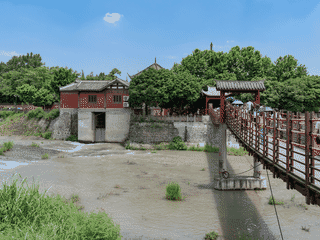
A historic-style suspension bridge offering impressive views of the Min River and the irrigation structures. Once made entirely of bamboo and vines, the modern reconstruction preserves the traditional appearance and remains one of the most iconic sights in Dujiangyan.
Recorded price: Included with scenic area ticket
Adapted from Wikivoyage contributors
Before you go
Connectivity
China Mobile, China Unicom, and China Telecom offer prepaid SIMs with data. Most hotels and malls provide free WiFi. A VPN may be needed for Western apps.
Culture
Dujiangyan is a major Taoist center with temples on Mount Qingcheng. Show respect in religious sites: dress modestly, speak quietly, and follow temple protocols.
Food
Sichuan cuisine is spicy and flavorful. Rabbit heads are a local delicacy. Night markets offer budget-friendly street food from 17:00 to 23:00.
Health
No special vaccinations required for Sichuan. Drink bottled water; tap water is not potable. Mosquitoes appear in summer near rivers.
Money
China uses CNY (¥). ATMs are widely available; Alipay and WeChat Pay dominate urban transactions. Some small vendors and rural areas may prefer cash.
Transport
High-speed trains from Chengdu take about 30 minutes to Dujiangyan. Local buses and taxis connect all major sites. Rent a car for day trips to surrounding mountains and ancient towns.
Visa
Most visitors need a China visa; Dujiangyan is not a visa-free transit zone. Apply at Chinese embassies or consulates before travel.
Weather
Autumn (Sept–Nov) is ideal with mild temperatures. Summers are hot and rainy; winters are mild but overcast. Bring rain gear and layers for mountain trails.