
Djerba
Africa · Tunisia
See also
_(49758623897).jpg)
Monastir
Tunisia35.77°N 10.82°E
Overview
Djerba is the largest island in North Africa and one of Tunisia's premier beach destinations, attracting French, German, and Italian tourists seeking sun, sand, and cultural experiences. The island preserves unique traditions including a living Berber language and one of the last Jewish communities in the Arab world, making it a fascinating cultural destination beyond its beaches.
Languages: Arabic
Why go?
Djerba is the largest island in North Africa and one of Tunisia's premier beach destinations, attracting French, German, and Italian tourists seeking sun, sand, and cultural experiences. The island preserves unique traditions including a living Berber language and one of the last Jewish communities in the Arab world, making it a fascinating cultural destination beyond its beaches. With dramatic sunsets, peaceful countryside, and traditional architecture, Djerba offers a slower pace than mainland Tunisia.
Adapted from Wikivoyage contributors · CC BY-SA 4.0
Getting there
Djerba-Zarzis International Airport (DJE) serves the island with international flights, particularly from European countries. The main arrival point for the island is through Houmt Souk, the capital city. Long-distance buses depart from the Houmt Souk bus station (gare routière) to major mainland cities including Tunis, Sfax, and Gabès.
Adapted from Wikivoyage contributors · CC BY-SA 4.0
Get around
Public transportation is limited on Djerba, but taxis are readily available at taxi stations (Stations de taxis) found in most towns and visible on Google Maps. Taxi drivers are honest and use their meters, making taxi rides a reliable option. Ridesharing apps like Bolt and Uber do not work on Djerba as of early 2024. Visitors can also rent bicycles or motorcycles for more independent exploration of the island.
Adapted from Wikivoyage contributors · CC BY-SA 4.0
When to go
Djerba enjoys a Mediterranean climate with hot summers and mild winters. The peak tourist season runs from June to August when temperatures are warmest for beach activities. Flamingos are present at Ras R'mel peninsula during the colder months starting in October, making autumn an interesting time for wildlife observation. The El Ghriba Synagogue attracts Jewish pilgrims during Lag b'Omer, 34 days after the start of Passover.
Adapted from Wikivoyage contributors · CC BY-SA 4.0
Where to stay
Djerba offers hotels for all budgets, from basic accommodations to luxury resorts. The Auberge de Jeunesse in central Houmt Souk provides dormitory beds at 8 DT per person per night, including simple breakfast, though rooms lack electric outlets. Hotel Essalem near the louage station offers single rooms from 20 DT in low season with shared bathrooms. Wostel Djerba in Hara Sghira costs €25 per night and caters to digital nomads with working space.
Adapted from Wikivoyage contributors · CC BY-SA 4.0
Food and drink
Djerba's cuisine features fresh grilled fish, couscous with fish and lamb, and local specialties like brik à l'oeuf, lablabi (chickpea soup), and salade mechouia. Street food options include fricasse sandwiches, Tunisian sandwiches (casse-croute tunisien), and local pizzas from souk vendors. Smaller shops with Arabic signage offer lower prices than tourist-facing establishments. For beverages, try fresh orange juice, mint tea, Turkish coffee, boukha (local fig liquor), celtia (local beer), and l'ban (liquid yogurt). Always drink bottled water.
Adapted from Wikivoyage contributors · CC BY-SA 4.0
Things to do
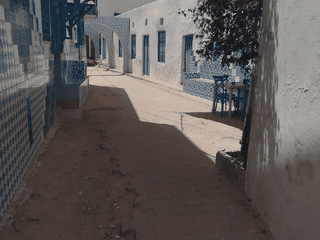
Beaches are the main attraction, with incredibly clear blue-green waters near Djerba Explore where camel and horse rides cost around DT10. Visit the colorful souks of Houmt Souk, particularly near Place d'Algérie, and watch traditional fish criers auctioning fresh catch in the marché central. The Lalla Hadhria Museum and Djerba Traditional Heritage Museum showcase the island's cultural history. Street art enthusiasts should visit Djerbahood in Hara Sghira, featuring works by international artists throughout the village laneways.
Adapted from Wikivoyage contributors · CC BY-SA 4.0
Cultural and historic sites
Houmt Souk's Borj El Kebir is a 14th-century fort with an explanation room, while the nearby marina and port area showcase traditional life. The El Ghriba Synagogue in Erriadh village serves a Jewish community dating back at least 2,000 years. Guellala village is known for pottery-making traditions from Roman times and offers panoramic views from its hilltop café where mint tea costs 1.5 DT. Djerba Explore hosts over 400 Nile crocodiles and includes access to the Lalla Hadhria Museum and a traditional village.
Adapted from Wikivoyage contributors · CC BY-SA 4.0
Go next
From the Houmt Souk bus station (gare routière), buses connect to major Tunisian cities on the mainland including Tunis. Various tour agencies offer one to two-day desert trips to areas west of the island. The ferry dock at Ajim serves boat trips to Ras R'mel peninsula where flamingos gather in cooler months.
Adapted from Wikivoyage contributors · CC BY-SA 4.0
Safety
Djerba is generally considered a safe destination for tourists. Standard precautions against petty theft apply, particularly in crowded market areas. Women travelers should dress modestly, especially when visiting religious sites. Taxi drivers are described as honest and use meters.
Adapted from Wikivoyage contributors · CC BY-SA 4.0
Etiquette
When shopping in souks, bargaining is expected and visitors should not hesitate to offer even a quarter of the asking price. Modest dress is recommended, particularly for women visiting mosques and synagogues. As a Muslim-majority island with a historic Jewish community, visitors should be respectful of religious customs.
Adapted from Wikivoyage contributors · CC BY-SA 4.0
Field guide adapted from Wikivoyage contributors · CC BY-SA 4.0. Text has been adapted and organized for this guide. About our sources.
Places to know
A few starting points from the guide. Check current hours and prices before you go.
- sleep
Auberge de Jeunesse
Youth hostel 10 minutes' walk from the north fort and 15 minutes from centre ville, in the cool Place d'Algerie. Price includes a simple breakfast of bread, butter, jam, and coffee or tea, to be taken in the courtyard, although the kittens will surely try to beg some from you. A charming place to stay, as it is located in an old funduk. Beware that there are two Rue Moncef Beys - look for the one inaccessible by cars. No electric plugs in the room, you'l have to leave your phone at the reception to charge, but there is wifi. Try to get the rooms just on the right of the reception as they have their own showers. On a visit in July 2016, the kitchen was not open for use other than in the mornings.
Recorded price: 8 DT per night per person
Adapted from Wikivoyage contributors
- sleep
Hotel Essalem
Very basic hotel, but cheap and in the town centre. Shared bathroom, CRT TV, window might not close, no toilet paper.
Recorded price: DT20 for single room in low season
Adapted from Wikivoyage contributors
- sleep
Wostel Djerba
One of the few true hostels on Djerba, located inland in Hara Sghira in the heart of the 'Djerbahood' street art project. The hostel is run by three very laid-back local guys. Facilities are basic but there is a decent working space for digital nomads.
Recorded price: €25
Adapted from Wikivoyage contributors
- eat
Fast Food Abdou
A street food eatery serving local and national specialties like brik, mlawi and fricasse, as well as sweet treats. Despite facing the main market for souvenirs, this place is popular with locals and not a tourist trap.
Adapted from Wikivoyage contributors
- eat
Le Petit Crustacé
In Ajim has excellent fresh fish dishes and genuinely friendly staff. You can see and choose the fish you want to eat and watch it being grilled in front of you. The relatively expensive price (15-30 DT depending on the fish you choose) contains starter dishes and fresh fruit dessert, you won't leave hungry. Located near the ferry dock.
Adapted from Wikivoyage contributors
- see
Borj El Kastil
Ruins of a 13th century castle built when Djerba was under the control of the Kingdom of Sicily.
Adapted from Wikivoyage contributors
- see
Borj El Kebir
Ancient castle dating back to the 14th century.
Adapted from Wikivoyage contributors
- see
Djerba Explore
Hosts the biggest Mediterranean crocodile farm (over 400 creatures imported from the Nile River since 1992) and the impressive Lalla Hadhria Museum, as well as an interesting interactive traditional village in the back. 12 DT per person includes entrance to all three sections.
Adapted from Wikivoyage contributors
Before you go
Bargaining
Bargaining is expected in souks; start at 25% of the asking price.
Connectivity
WiFi available at hostels like Auberge de Jeunesse; mobile data requires a local SIM card.
Culture
Djerba has a unique Berber dialect and is home to one of the last Jewish communities in the Arab world.
Food
Fresh fish, couscous, and Tunisian street food are staples. Smaller local shops offer better prices than tourist-facing restaurants.
Money
Tunisian Dinar (DT) is the local currency; foreign currencies are not widely accepted. Cash is preferred for smaller purchases and markets.
Transport
Taxis use meters and are reliable; ridesharing apps do not work. Bicycle and motorcycle rentals available.
Weather
Mediterranean climate with hot summers (June-August) and mild winters. Best beach weather from May to October.