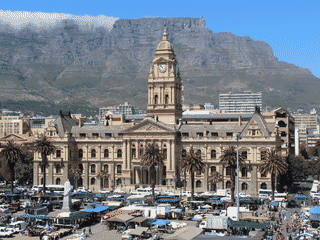

Cape Town
Africa · South Africa
See also
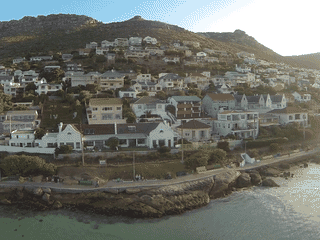

Fish Hoek
South Africa34.14°S 18.43°E · 15 m
.jpg)
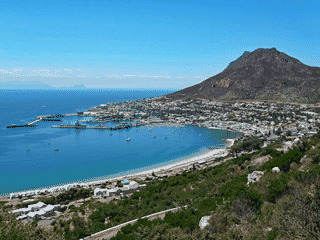
Simon's Town
South Africa34.19°S 18.44°E · 222 m
Overview
Cape Town is nicknamed the Mother City within South Africa. Compared to the more business oriented Johannesburg it is known for its relaxed and leisurely atmosphere.
Languages: Afrikaans, English, Southern Ndebele, Northern Sotho, Southern Sotho, Swazi, Tswana, Tsonga, Venda, Xhosa, Zulu
Why go?
Cape Town is nicknamed the Mother City within South Africa. Compared to the more business oriented Johannesburg it is known for its relaxed and leisurely atmosphere. Compared to other parts of South Africa, Cape Town is also distinctly more 'western'.
Adapted from Wikivoyage contributors · CC BY-SA 4.0
Climate
Summer (December–February) is hot and dry, with low humidity. Winter (June–August) is wet and chilly, with temperatures around 5–15°C. The ideal times to visit are October–November (spring) and March–May (autumn). February is the most reliable month for sunshine.
Adapted from Wikivoyage contributors · CC BY-SA 4.0
Getting in
Cape Town International Airport (CPT) serves domestic and international flights. Intercape, Greyhound, and Translux buses connect to major cities. The main railway station is Cape Town Station. Baz Bus offers a hop-on-hop-off service along the coast.
Adapted from Wikivoyage contributors · CC BY-SA 4.0
Get around
MyCiTi bus rapid transit is recommended for tourists, with smartcards costing R30–50. Golden Arrow buses serve the metro area cheaply. Minibus taxis are reckless and unregulated. Ride-hailing services are safe after dark. Driving is left-hand traffic.
Adapted from Wikivoyage contributors · CC BY-SA 4.0
When to go
Summer (Dec-Feb) is hot and crowded, with peak holiday season mid-Dec to mid-Jan. Winter (Jun-Aug) is wet and chilly. The best times are spring (Oct-Nov) and autumn (Mar-May) for mild weather and fewer tourists. February is the most reliable month.
Adapted from Wikivoyage contributors · CC BY-SA 4.0
Where to stay
Accommodation ranges from hostels (dorm beds from R200) to luxury hotels. Budget stays under R200, mid-range R200–1000, splurge over R1000. City centre and Gardens/Tamboerskloof are convenient; suburbs like Muizenberg and Simon's Town are quieter.
Adapted from Wikivoyage contributors · CC BY-SA 4.0
Food and drink
Food is high quality, with local seafood, Karoo lamb, and Cape Malay cuisine. Budget meals under R60, mid R60–120, splurge over R120. V&A Waterfront is crowded and expensive; Kloof Street and De Waterkant offer better value. Long Street is the nightlife hub.
Adapted from Wikivoyage contributors · CC BY-SA 4.0
Things to do
Must-sees: Table Mountain (cable car or hike), Bo-Kaap, Castle of Good Hope, Kirstenbosch Botanical Gardens, V&A Waterfront, Two Oceans Aquarium. Activities include surfing at Muizenberg, kite surfing at Bloubergstrand, hiking on Table Mountain, and wine tasting in Constantia and the Cape Winelands.
Adapted from Wikivoyage contributors · CC BY-SA 4.0
Stay safe
Central Cape Town is safe by day, but take taxis after dark. Avoid displaying valuables, and beware of smash-and-grab theft in cars. Use ATMs with care and never accept help from strangers. Avoid minibus taxis and unofficial tours.
Adapted from Wikivoyage contributors · CC BY-SA 4.0
Connectivity
Free WiFi is available at many cafes (e.g., Mugg&Bean, McDonald's). Prepaid SIMs and data bundles are widely available. Always-On provides prepaid WiFi spots. Power plugs are type M (230V).
Adapted from Wikivoyage contributors · CC BY-SA 4.0
Day trips
Popular day trips: Cape Peninsula (Cape of Good Hope, Boulders Beach penguins), Cape Winelands (Stellenbosch, Franschhoek, Paarl), and West Coast Fossil Park. Most are easily accessible by car or tour.
Adapted from Wikivoyage contributors · CC BY-SA 4.0
Go next
Cape Town is the gateway to many destinations: the Cape Winelands, Garden Route, and further afield to Namibia. Buses (Greyhound, Intercape) connect to major cities. The airport has domestic and international flights.
Adapted from Wikivoyage contributors · CC BY-SA 4.0
Field guide adapted from Wikivoyage contributors · CC BY-SA 4.0. Text has been adapted and organized for this guide. About our sources.
Places to know
A few starting points from the guide. Check current hours and prices before you go.
- do
African Experience
Adapted from Wikivoyage contributors
- do
Ama Feesh Charters
Recorded price: Per charter, currency
Adapted from Wikivoyage contributors
- do
Andulela Tours
Offers a variety of different tours, including jazz, soccer, poetry, and culinary tours. Their emphasis is on meeting people, not looking at them.
Adapted from Wikivoyage contributors
- buy
Blue Route Mall
Adapted from Wikivoyage contributors
- do
Cable Car to the top of Table Mountain
One-way and return cable car ticket available. Wheelchair accessible throughout, with a separate lift entrance and friendly staff will help accessibility visitors. Weather conditions at the top of the mountain are not the same as at the bottom so always take something warm to wear when going up the mountain, even if it is a nice toasty 30˚C at the bottom of the mountain. Wear sunblock and carry a water bottle (there is also a free drinking fountain at the top near the cable station). There is a cafe with a limited range of snacks, coffee, beer and wine at the top. Table Mountain is the home of a small animal, the rock rabbit (known locally as the 'Dassie') whose closest relative, DNA-wise, is the elephant, and you can see them running around on the rocks at the top of the mountain. If you want to see the sunset, you can go on the last car up which ranges from 17:00 (winter) and 20:30 (summer).
Recorded price: currency
Adapted from Wikivoyage contributors
- buy
Canal Walk Shopping Centre
Cape Town’s largest shopping centre has over 400 stores.
Adapted from Wikivoyage contributors
- do
Cape Argus Cycle Tour
Total distance is km
Recorded price: Entrance fee is currency
Adapted from Wikivoyage contributors
- do
Cape Charters
Adapted from Wikivoyage contributors
Before you go
Connectivity
Good mobile coverage; SIM cards easily available from Vodacom, MTN, or Cell C at the airport or shops.
Culture
Cape Town is multicultural. Try Cape Malay cuisine in Bo-Kaap. Tipping 10-15% is customary.
Health
Tap water is safe to drink. Sun protection is essential year-round.
Language
English is widely spoken, alongside Afrikaans and Xhosa.
Local transport
MyCiTi bus is reliable; Uber is safe and convenient. Minibus taxis are cheap but chaotic.
Money
Currency is South African Rand (ZAR). ATMs charge a fee of R10 for foreign cards. Credit cards widely accepted, but bargaining at markets is expected.
Safety
Central areas safe by day; after dark use taxis or ride-hailing. Avoid displaying valuables. Be alert for smash-and-grab theft at traffic lights.
Transport
MyCiTi bus is best for tourists. Minibus taxis are cheap but reckless. Ride-hailing apps like Uber are reliable.
Visa context
Visa rules depend on passport; check current entry rules before booking.
Water
Tap water is safe to drink.