Overview
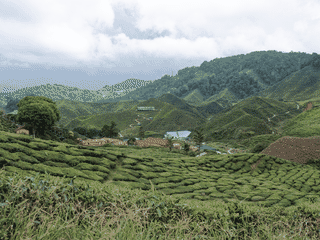
Cameron Highlands is a cool upland region of tea plantations and forest trails. Hikes and plantation visits make a contrast to the tropical lowlands.
Food · Nature · Trekking
Did you know?
- Tea plantations and mossy forests occupy a region around 1,500 metres in elevation.
- The trail network labels Gunung Brinchang as Trail 1 and Gunung Berembun as Trail 3.
- Boh tea can be sampled at the plantations where it is produced.
Where it is
Cameron Highlands is 31 km east of Ipoh.
Why go?
Cameron Highlands is Malaysia's most extensive hill station, developed as a cool retreat from the tropical lowlands. With an area of 712 km² and an elevation of 1,500 m, it offers lush tea plantations, mossy forests, and a network of hiking trails. The climate is mild (18°C average), and the region is home to diverse wildlife and indigenous villages.
Getting in
The highlands are accessible by road from both coasts. Most travellers enter from the west via Ipoh (through Simpang Pulai) or further south via Tapah. Eastern routes pass through Gua Musang or Kuala Lipis. Buses from Ipoh to Tanah Rata cost around RM20-21.30.
Getting around
The resort comprises eight neighbourhoods, with the main townships being Ringlet, Tanah Rata, and Brinchang. Tanah Rata and Brinchang are about 4 km apart. Public transport is limited, but walking and hitchhiking are possible on the main road. Many guesthouses offer tour and transport bookings.
When to go
The climate is mild year-round, with mean annual temperature 18°C. Days rarely exceed 25°C, and nights can drop to 12°C. Rain is common, especially in the afternoons, so pack a rain jacket. The highlands are popular year-round, but weekends and school holidays see more crowds.
Where to stay
Budget accommodation is concentrated in Tanah Rata and Brinchang. Dorms start from RM12-15, private rooms from RM20-120. Popular hostels include Kang Traveller's Lodge, Cameronian Inn, and Twin Pines. For a unique experience, Sg Pauh Campsite offers tent spots for RM3. Mid-range options like Bala's Holiday Chalet provide colonial charm.
Food and drink
Food is diverse and affordable: Malay, Western, Indian, and Chinese cuisines are abundant. Must-try local dishes include steamboat and nasi lemak. Prices are low: a meal at Yong Teng Cafe costs RM2-10, and banana leaf rice at Restoran Kumar is RM7. The signature drink is Boh tea, best sampled at Lord's Cafe (RM2) or the Boh plantations.
Things to do
The main draw is hiking: over a dozen trails range from easy walks to tough climbs, including Gunung Brinchang (Trail 1) and Gunung Berembun (Trail 3). Other attractions include the Boh Tea Centre (free tours), Mossy Forest boardwalk, Time Tunnel museum (RM5), and Butterfly Garden (RM5). For guided tours, Rainsforest Adventure 2 offers Rafflesia viewing (RM98).
Safety
Hiking requires caution: check weather, bring at least 1L of water, inform your guesthouse of your route, and keep your phone charged. Trails are generally well-marked but can become slippery after rain. Beware of aggressive dogs on Trail 9, and watch for poison ivy. Water refill stations are available at Tanah Rata (10 cents/L), but only one is working.
Connectivity
Internet facilities are readily available in most hotels and cafes. Mobile coverage is generally good on main roads and towns, but can be patchy on jungle trails. A fully charged phone with emergency numbers is recommended for hikes.
Budget
A daily backpacker budget of RM50-80 is sufficient: dorm RM12-20, meals RM15-25, local transport RM10-20, and activities RM5-10. Splurging on a guided tour (RM98) or a nice meal pushes it higher. Bus to Ipoh costs RM20.
Day trips
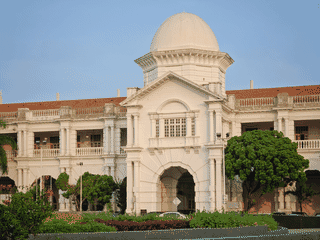
The main day trip is to Ipoh, about 1 hour away by road. Buses from Tanah Rata cost RM20-21.30. Ipoh offers colonial architecture and excellent local food.
Go next
The most common onward destination is Ipoh, reachable by bus (RM20-21.30, 1 hour). Other routes include continuing east to Gua Musang or west to Tapah and the lowlands.
Guide text adapted from Wikivoyage contributors under CC BY-SA 4.0.
Where to start
Eat
Gerai Opah
If you're looking for a good filling breakfast, try the kampung nasi lemak. Only open for breakfast and until it runs out so hurry up
Eat
Jasmine's Cafe
Big on Dutch soccer clubs, there's only one color that characterises this place, Oranje. Superb ambience, good chicken chops and some vegetarian options.
Price when recorded: RM33-55 per pax
Eat
Restoran Ferm Nyonya
Only Nyonya restaurant of the town.
Eat
Restoran Kumar
Very popular place for authentic south Indian meals such as banana leaf rice RM7. Tandoori chicken RM7.
Eat
Restoran Mayflower
Good place for steamboat and Chinese food.
Eat
Restoran Zainab Sam
Local cuisine.
Drink
Bala's Holiday Chalet
Famous for its tea and scones.
Buy
Big Red Strawberry Farm
The Big Red Strawberry Farm is one of the largest Agro-Tourism Farms in Malaysia. Pick your own strawberries and tomatoes. The sheltered farm covers an area of approximately 5 hectares. There are no charges for photography at the farm. Free wifi access at the cafeteria. Ample parking available.
Before you go
Connectivity
Internet facilities readily available; water refill station at Tanah Rata (10 cents/L).
Food
Try steamboat and local Boh tea.
Money
Budget dorm from RM12, meals from RM2, tea from RM2.
Safety
Hiking precautions: check weather, bring water (1L min), inform hotel, use GPS. Beware of aggressive dogs on Trail 9.
Transport
Access by road from Ipoh (via Simpang Pulai) or Tapah; buses to Ipoh RM20-21.30.
Weather
Mean annual temperature 18°C, rarely above 25°C, can drop to 12°C at night.